Physical Address
304 North Cardinal St.
Dorchester Center, MA 02124
Physical Address
304 North Cardinal St.
Dorchester Center, MA 02124

Outbreak of Oropouche The virus has been circulating in the Amazon for decades, but historically the pathogen has caused little trouble to the rest of the world. But this seems to be changing. In 2024, the virus showed it could travel.
Most of this year’s more than 11,000 cases have occurred in Brazil and Peru, where the virus is an old acquaintance, but it was also found in Bolivia, Colombia, Ecuador, Guyana, Panama and Cuba in 2024 – with 603 cases reported in the latter as well as transmission in the country for the first time. . Infected travelers also transported the virus to North America and Europe: it has been found twice in Canada this year and 94 times in the US – with 90 cases reported in Florida – while 30 imported cases have been found across Spain, Italy and Germany.
For those who study Oropouche and other arboviruses — families of viruses transmitted by arthropods such as mosquitoes and ticks — the situation is alarming. Despite clues about its transmission cycle, there is not enough information to accurately predict Oropouche’s future behavior. “We have some pieces of the puzzle, but not absolute certainty about what role each one plays,” said Juan Carlos Navarro, research director at SEK International University, who heads the Emerging Diseases and Epidemiology Group.
The first symptoms of the disease appear suddenly three to 12 days after the bite and usually last four to six days. Symptoms include headache, muscle and joint pain, chills, nausea, vomiting and sensitivity to light. Skin rashes and bleeding from the gums or nose may occur, and in severe cases, meningitis or encephalitis—inflammation of the brain and its membranes—may develop. An Oropouche infection is usually uncomplicated, if unpleasant, although this year for the first time Brazil recorded two deaths linked to the virus.
Where cases have occurred, researchers are increasingly identifying something that could explain why the virus emerged and spread: deforestation. The conversion of natural land to grow crops, drill for oil or mine for resources “seems to be the main driver of outbreaks,” Navarro said. “It combines three links: viruses, vectors and humans.”
In 1955, a young charcoal burner fell ill after working and sleeping in the woods near the Oropouche River in Trinidad and Tobago for two weeks. He had fever for three days. This was the first documented case of Oropouche virus disease. Since then, dozens of outbreaks have been reported, mostly in the Amazon basin.
Navarro has devoted 30 years to the study of arboviruses such as dengue, equine encephalitis, mayaro and, since 2016, auropouche. It has two transmission cycles. In the wild, the reservoirs of Oropouche virus—animals that carry the virus even if they are not sick themselves—are believed to be nonhuman primates such as Neotropical marmosets and capuchin monkeys, sloths, rats, and birds. The virus has either been isolated from these animals or antibodies have been found in their systems. In fact, this disease is also known as “sloth fever”. What role sloths and nonhuman primates play in the transmission cycle is not understood, Navarro said. “They’re probably amplifying the host” — meaning they’re probably allowing the virus to rapidly reproduce in their bodies to high concentrations.
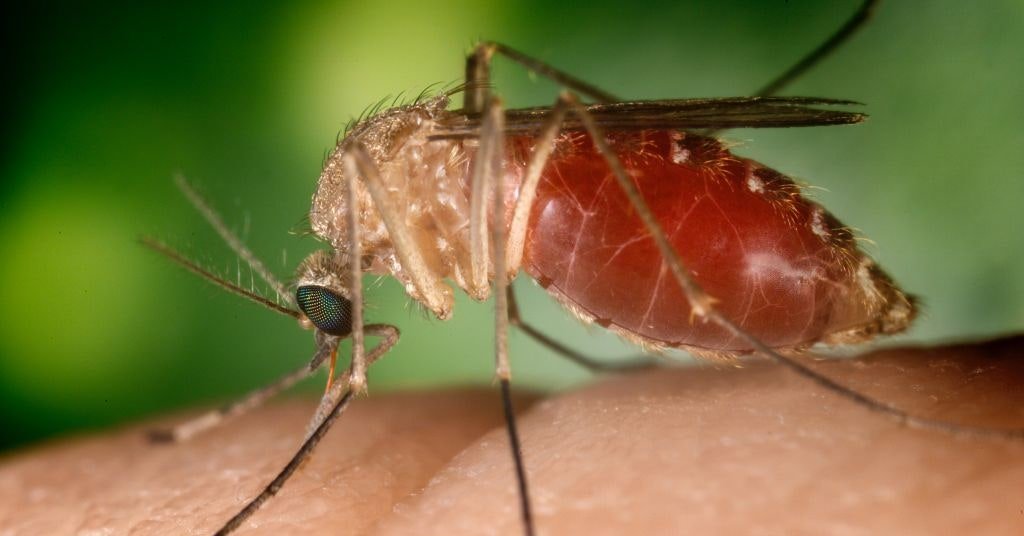
When an epidemic occurs in humans, there is a second infection cycle. Of these, humans are the amplifying hosts, and the virus is transmitted between them through blood-feeding insects. The main vector that transfers pathogens to humans is the midge Culicoides parensis, which is about the size of a pinhead and is found from Argentina to the United States. Some studies suggest that Culex and Aedes mosquitoes can also transmit oropouch infections. In fact, the first isolation of the virus was from Trinidad and Tobago Coquiletidia venezuelensis, Another type of mosquito.


