Physical Address
304 North Cardinal St.
Dorchester Center, MA 02124
Physical Address
304 North Cardinal St.
Dorchester Center, MA 02124

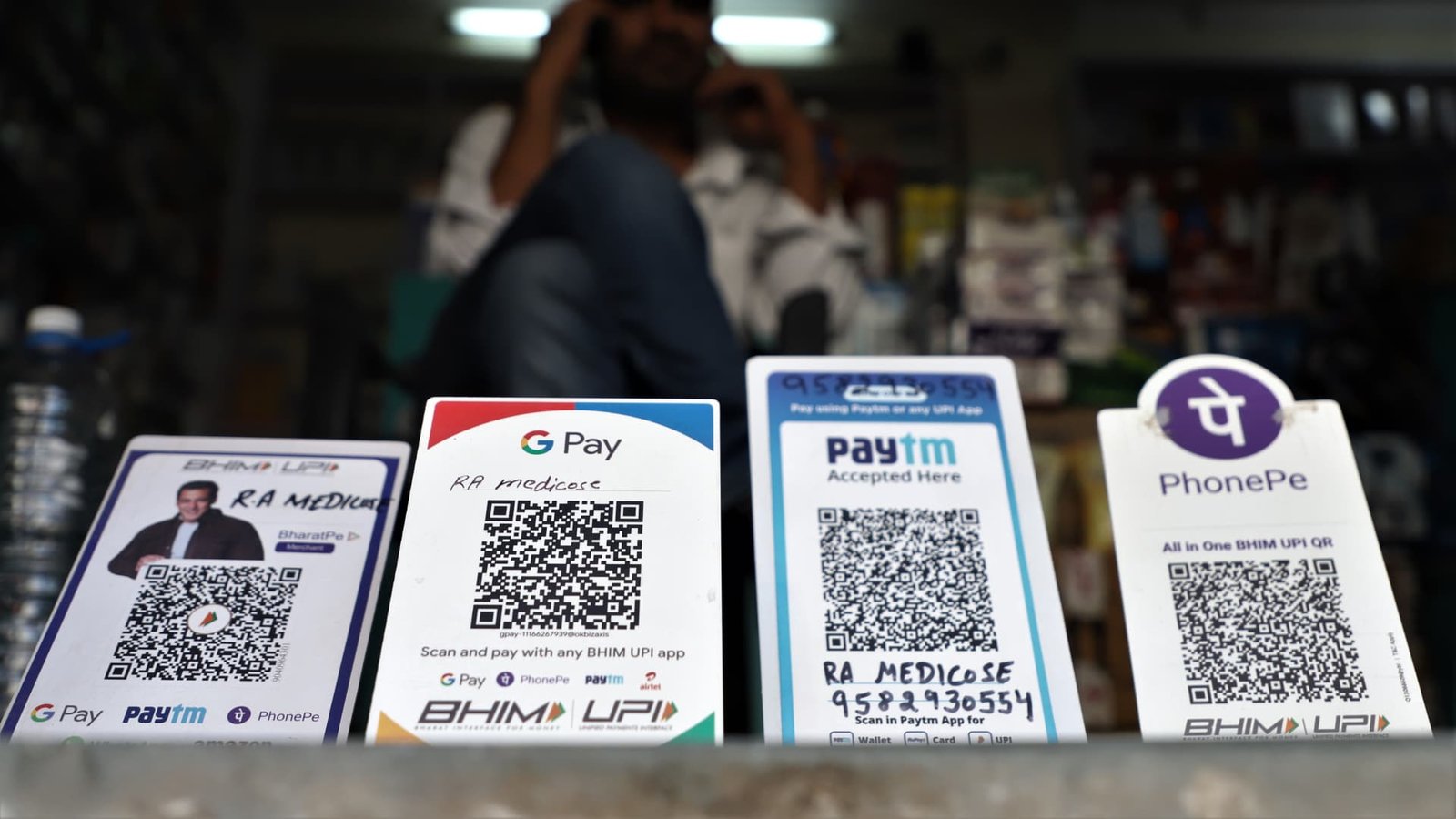
Paytm, PhonePe, Google Pay (Gpay) and Bhim UPI QR codes (Standee) are kept outside for cashless payments at a medical store in Gurugram on the outskirts of New Delhi, India on May 16, 2020.
Nasir Kachroo NurPhoto | Getty Images
This report is from this week’s CNBC Inside India newsletter, which brings you timely, insightful news and market commentary on the emerging powerhouse. Subscribe here
Money seems to move much faster in India than the mobility of the people making the transactions, and nowhere was this more evident than at the Global Fintech Fest at Mumbai’s Bandra Kurla complex last week.
As delegates navigated traffic jams in India’s financial capital and dealt with a lack of last-mile connectivity, in the conference rooms product launches highlighted how transferring money has become as easy as sending a WhatsApp message.
The catalyst for this digital transformation is India’s Unified Payments Interface, or UPI, as it breaks out of its internal sandbox and connects to the global monetary network.
The headline announcement at the fintech fest came from PayPal as India’s UPI became the first payment system to be integrated into the PayPal World platform for international transactions.
“Everywhere I go, India pops up,” PayPal CEO Alex Chris said at GFF 2025, noting the country’s growing reputation as a place where talent, capital and commercial opportunities congregate.
PayPal is helping India’s push to expand UPI globally, with experts saying the payment system is already part of the country’s diplomatic toolkit. A spokesperson at GFF called it “India’s fintech diplomacy”.
Just a day before PayPal’s announcement, India’s Commerce Minister Piyush Goyal launched UPI in Qatar – the eighth overseas destination to join the payments platform – highlighting the growing economic integration between the two nations. “Our people will be able to trade more, trade smarter, at a lower cost,” Goyal said.
The deeper one looks at UPI’s transaction numbers, the more its international rollout begins to look less like a technological story and more like an economic strategy.
According to the Indian government, UPI, launched in 2016 by the National Payments Corporation of India, is the world leader in processing real-time payments, processing more than 640 million transactions a day, compared to Visa’s 639 million.
The global rollout of UPI comes at a time when Indian travelers and foreign workers are driving record volumes of cross-border transactions. This is not only a possibility for UPI but also for international remittance platforms like Wise and Briskpe.
“India’s cross-border payment needs are growing from multiple directions,” said Taneya Bhardwaj, head of South Asia expansion at Wise, which claims to power 10% of India’s inbound remittances.
“Indians are spending more time abroad and need better tools to manage money across borders,” Bhardwaj added.
To begin with, the opportunity for outbound transactions in India is growing. In 2024, 30.8 million Indians have traveled abroad — 10.8% jump from a a year earlier.
India’s international spending to reach $35 billion in 2024, according to UN Tourismand has seen rapid growth over the past few years as young professionals, tourists and entrepreneurs increasingly travel abroad.
India’s plans to extend UPI to more than 20 countries by March 2029 are set to “transform” cross-border money transfers, according to a NPCI-BCG report that was released at GFF.
India was the largest recipient of remittances among low- and middle-income countries in 2024 at $129 billion, followed by Mexico at $68 billion and China at $48 billion, according to World Bank estimates.
“India is much more engaged in global financial transactions than its merchandise exports suggest. This is due to a) large trade in services b) inflows and outflows of remittances and c) capital market transactions,” said Amitendu Palit, senior fellow at the Institute of South Asian Studies.
“All this will be facilitated by UPI and its interoperability with other digital payment platforms,” he said, adding that UPI’s tie-ups with Singapore’s PayNow and Thailand’s PromptPay are “already delivering good results.”
For the fiscal year ended March 2025, India it is reported remittances doubled to $135.46 billion from $61 billion in the fiscal year ended March 2017.
Experts say that traditional banks and foreign exchange providers usually mark up the exchange rate by 3% to 3.5% and are not very transparent about it.
“You may see ‘zero fees’ advertised, but they make money by giving you a worse exchange rate than the actual average market rate – Google’s. Then there are additional fees – dynamic currency conversion fees, foreign transaction fees, ATM withdrawal fees, account maintenance fees,” Bhardwaj said.
These high, hidden costs are not only a pain for the end recipient but also a cause for concern for the government, experts said.
If the government manages to reduce transaction costs by offering the UPI payment service for cross-border transactions at competitive rates, it will also force other providers to reduce their costs. “As UPI’s infrastructure is also cheaper compared to other networks, the overall cost of remittance in the economy is reduced not only for India but also for the partner country,” the NPCI-BCG report said.
Lower transaction costs mean more remittances coming into the country instead of being lost to foreign exchange intermediaries, said Priyanka Kishore, chief economist at Asia Decoded.
“Rising remittances and a boom in digital exports have pushed the current account deficit below 1 percent of GDP, although the goods trade deficit has widened to about 8 percent in the past few years,” she said. Remittances have a positive impact on India’s balance of payments as they reduce the current account deficit while providing a stable source of foreign exchange.
India’s CAD is expected to be 1.2% of its GDP in the current financial year, while trade data showed the deficit widened nearly 32% to $32.5 billion in September from a year earlier.
No wonder UPI going international is a matter of both pride and celebration for the government.
“UPI’s international expansion is great for the ecosystem because it validates that India’s payments infrastructure can work globally. It also sets a benchmark for what Indian consumers expect – instant, transparent, seamless transactions,” Bhardwaj said.

Ravi Swarup, head of consumer products at Bain India, said the changing taste of Indian consumers is driving growth in the electronics sector.

Rajiv Ranjan of IDC Asia Pacific said India’s growing demand for AI-driven data centers is accelerating the adoption of liquid cooling technologies.

Pankaj Murarka, CEO and CIO of Renaissance Investment Managers, said the Indian stock market is currently the most expensive in the world, but he still expects growth in the second half of the year.
Google will invest $15 billion in building a data center in India. The American technology giant will invest 15 billion dollars to build data center capacity for a new artificial intelligence center in south India in the next five years. It will be Google’s largest AI center in the world outside the US
LG Electronics India is ahead of its parent company in terms of market capitalization. The company’s stock jumped as much as 50% on its debut after the initial public offering was in the greatest demand for a 2008 Indian IPO led by institutional investors.
Discord is brewing in the boardroom of Tata Trusts, which controls 66% of Tata Sons. The root of the current dispute is the bypassing of Tata Sons you must obtain prior approval from Tata Trusts for any major financial investment. Some trustees see this as undermining the rights of the Tata Trusts.
The Indian government has injected $30 billion in fiscal stimulus, which is already reflecting the recovery in consumption. The second half will be better than the first half for India and we expect earnings to return to mid-teens growth in the next fiscal year.
— Pankaj Murarka, CEO and CIO, Renaissance Investment Managers
The Exquisite 50 the index and the BSE Sensex were trading 0.4% higher at 9:45 am local time. The indices have gained 7.5% and 6% respectively this year.
The benchmark 10-year Indian government bond yield was 6.490%.

October 17: Canara HSBC Life Insurance shares list on stock exchanges
October 21: Closure of National Stock Exchange for Diwali
October 22: Partial closure of the National Stock Exchange for Diwali
Every weekday, CNBC’s news show ‘Inside India’ brings you news and market commentary on emerging powerhouses and the people behind its rise. Stream the show live on YouTube and watch the highlights here.
PROJECTIONS:
USA: sunday-thursday, 23:00-0000 ET
Asia: Mon-Fri, 11:00-12:00 SIN/HK, 08:30-09:30 India
Europe: Monday-Friday, 05:00-06:00 CET


