Physical Address
304 North Cardinal St.
Dorchester Center, MA 02124
Physical Address
304 North Cardinal St.
Dorchester Center, MA 02124


 Tim Mansell
Kayla first tried fentanyl as a troubled 18-year-old growing up in the US state of North Carolina.
“I felt literally amazing. The voices in my head just completely went silent. I was instantly hooked,” she recalls.
The little blue pills that Kayla became addicted to were likely manufactured in Mexico and then smuggled across the border into the US, a deadly trade that President Donald Trump is trying to crack down on.
But drug cartels are not pharmacists. So Kayla never knew how much fentanyl was in the pill she was taking. Would there be enough of the synthetic opioid to kill her?
“It’s scary to think about,” says Kayla, reflecting on how she could have overdosed and died at any moment.
In 2023, there were over 110,000 drug-related deaths in the US. The rise of fentanyl, which is 50 times more potent than heroin, seemed unstoppable.
But then came a shocking twist.
In 2024, the number of fatal overdoses in the US is down by about 25%. That’s nearly 30,000 fewer deaths—dozens of lives saved every day. Kayla’s home state, North Carolina, is at the forefront of this trend.
One explanation is the commitment to harm reduction. That means promoting policies that prioritize the health and well-being of drug users rather than criminalizing people — a recognition that in the age of fentanyl, drug use too often ends in overdose death.
In North Carolina, where Kayla still lives and where overdose deaths are currently down an impressive 35%, harm reduction strategies are well developed.
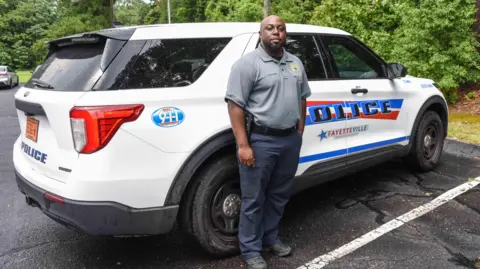
Kayla no longer takes street drugs. And she is a client of an innovative Law Enforcement Assisted Diversion (LEAD) program in Fayetteville. It is a partnership between the city police and the North Carolina Harm Reduction Coalition. Together, they work to divert substance users from crime and get them into recovery.
 Tim Mansell
“If someone is shoplifting from a grocery store, we do a criminal background check on them. And oftentimes we see that the crimes they’re committing appear to be funding the addiction they have,” said Lt. Jamal Littlejohn.
This can make them candidates for the LEAD program, which means they can get support to deal with their addiction and can start thinking about secure housing and work.
LEAD supporters say it’s not about being soft on crime. Drug dealers still go to jail in Fayetteville. “But if we can get people the services they need, it gives law enforcement more time to deal with bigger crimes,” said Lt. Littlejohn, who watched his own sister struggle with a substance use disorder.
Kayla blossomed. She’s come a long way from the days when she used prostitution to fund her fentanyl habit. As part of the LEAD process, her criminal record was expunged. She recently graduated as a Certified Nursing Assistant and now works in a residential home.
“It’s like the best thing ever. It’s the longest I’ve been clean,” she says.
Crucial to Kayla’s recovery is treatment. She had been on methadone for almost a year when she told her story to the BBC. “It keeps me from going back,” she believes.
Methadone and buprenorphine are drugs used to treat opiate use disorder. They stop hunger and stop painful withdrawal. Nationally, the treatment has played a role in breaking down overdose death statistics.
In North Carolina, it was a game-changer: More than 30,000 people were enrolled in the program in 2024, with numbers climbing in 2025.
 Tim Mansell
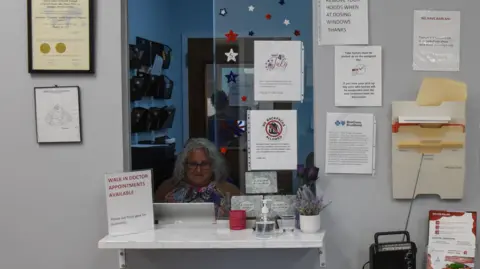
At 09:00 at one of the Morse clinics in the state capital of Raleigh, two or three people are waiting for their turn to be seen.
“The busiest time is 5:30 to 7 a.m., so before work,” says Dr. Eric Morse, an addiction psychiatrist who runs nine medication-assisted treatment (MAT) clinics in North Carolina. “Most of our people are working – once they get sober they show up to work on time every day.”
The clinic runs a fine-tuned operation. After patients register, they are called to the dispensing window to receive their prescription. They are in and out in minutes.
They will be randomly tested for illegal drugs. Dr. Morse says about half of his patients still test positive for street-bought opioids, but he doesn’t see that as a failure.
“Maybe you’re using once a week and you’re used to using three times a day … You’re still playing Russian Roulette with fentanyl, but you’ve taken a whole bunch of bullets out of the chamber, so your survival rate goes up a lot,” says Dr. Morse.
It’s harm reduction. So instead of being kicked out of the treatment program, patients who test positive for drugs get extra support and counseling. Dr. Morse says 80-90% will eventually stop using street drugs altogether. And in time, many will reduce their medication as well.
 Tim Mansell
Not everyone thinks this is the right approach.
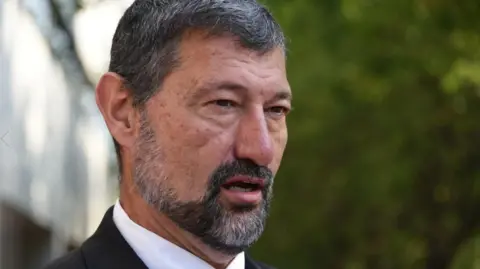
Mark Pless is a Republican who sits in the North Carolina State House of Representatives and was a full-time paramedic. He points out that illegal drug use begins with a choice.
And he doesn’t believe in harm reduction. In particular, he opposes treating opiate use disorder with drugs such as methadone or buprenorphine.
“You’re replacing an addictive product with another addictive product,” he says. “If you have to take it to stay clean, it’s still addictive. We have to figure out how to get people to do better — we can’t keep them on drugs forever.”
He supports abstinence treatment programs when drug users go “cool.”
But there is pushback from health professionals in North Carolina.
“I believe there are many paths to recovery,” says Dr. Morse. “I’m not abstinence-based treatment nonsense—except when you look at the medical evidence.”
Dr. Morse’s References 2023 Yale University study analyzing the risk of death for opiate users in a treatment program compared to people not in treatment. The study suggests that someone in withdrawal treatment is as likely — or more likely — to have a fatal overdose as someone who was not in treatment and continued to use street opioids like fentanyl.
In addition to treatment, another drug helps.
Naloxone is widely available and used as a nasal spray, it reverses the effects of an opioid overdose by helping someone breathe again. In North Carolina in 2024, it was applied more than 16,000 times. That’s potentially 16,000 lives saved—and that’s just the reported overdose reversals.
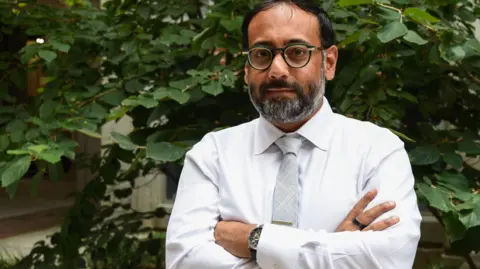
“This is as close to a miracle drug as we can imagine,” said Dr. Nabarun Dasgupta, a street drug scientist at the University of North Carolina.
 Tim Mansell
Many users of drugs like cocaine, methamphetamine, and heroin want to know that what they’re taking won’t kill them. Some people use test strips to check for fentanyl because they know it’s been implicated in so many fatal overdoses.
But the strips do not identify all potentially harmful substances. Dr. Dasgupta runs a national drug testing laboratory. Its users send a small portion of their drug supplies through local nonprofits.
“We analyzed nearly 14,000 samples from 43 states over the past three years,” he says.
Drug testing for potentially dangerous additives is an additional weapon in the harm reduction arsenal. Dr. Dasgupta believes another reason for the decline in overdose deaths in the U.S. is that young people are avoiding opiates like fentanyl.
“We’re seeing a demographic shift. Generation Z is dying of an overdose far less often than their parents’ or grandparents’ generations were at the same age,” he says.
Dr. Dasgupta isn’t entirely surprised that 20-year-olds are avoiding opioids. A shocking four in 10 American adults know someone whose life was ended by an overdose.
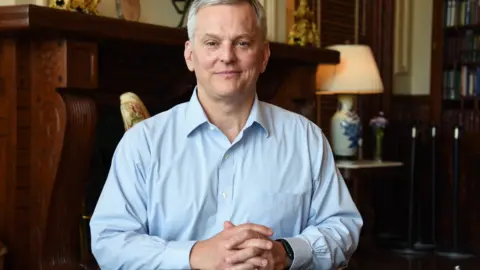
It is this epidemic of death that began in the 1990s from prescription opioids that motivated North Carolina’s former attorney general — now the state’s governor — to take action against powerful corporations profiting from so many Americans’ dark spiral into addiction.
Josh Stein picked up the phone to his colleagues in other states and took the lead in coordinating legal action against opiate manufacturers, distributors and retailers.
 Tim Mansell
“There was a Republican attorney general in Tennessee, I’m a Democrat in North Carolina… But we all care about our people and we’re all willing to fight for them,” Stein reflected.
The result, after years of intense negotiations, was an Opiate Agreement worth a total of around $60bn (£45bn). This is money that huge companies have agreed to pay to US states to be used to “alleviate the opioid epidemic”. North Carolina’s share is about $1.5 billion.
“It should be spent in four ways — drug prevention, treatment, recovery or harm reduction. I think it’s transformative,” says Governor Stein.
Meanwhile, national government funding is uncertain. The Medicaid cuts included in President Trump’s One Big, Beautiful bill could have a huge impact on this area.
At Morse Clinics in Raleigh, 70% of patients depend on Medicaid. If they lose health insurance, will they stop treatment and become more vulnerable to death by overdose? Although North Carolina’s drug death statistics look upbeat, thousands of people are still dying — and the state’s black, Native and non-white populations haven’t seen the same rates of decline.
And there remain other states that have seen a persistently slower rate of decline in fatal overdoses — including Nevada and Arizona.
 Tim Mansell
Nobody is happy. At least Kayla.
Trapped by fentanyl for three long years, she never overdosed, but she had to save her friends. Kayla’s parents didn’t know what to do with her.
“They kind of gave up on me — they thought I was going to be dead,” she recalled.
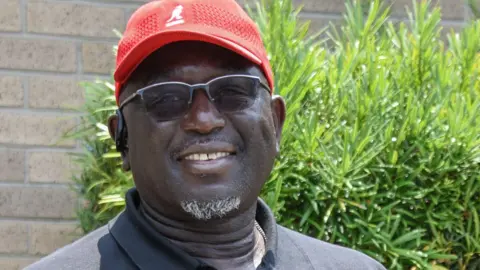
Kayla credits Charlton Roberson, her harm reduction mentor, as instrumental in her recovery. Her goal now is to taper off her methadone and become drug and drug free. She also wants to get a job in a hospital.
“I feel more alive than I ever did when I was on fentanyl,” she says.
If you’ve been affected by the issues in this story, you can get help and support via the BBC’s action line.