Physical Address
304 North Cardinal St.
Dorchester Center, MA 02124
Physical Address
304 North Cardinal St.
Dorchester Center, MA 02124

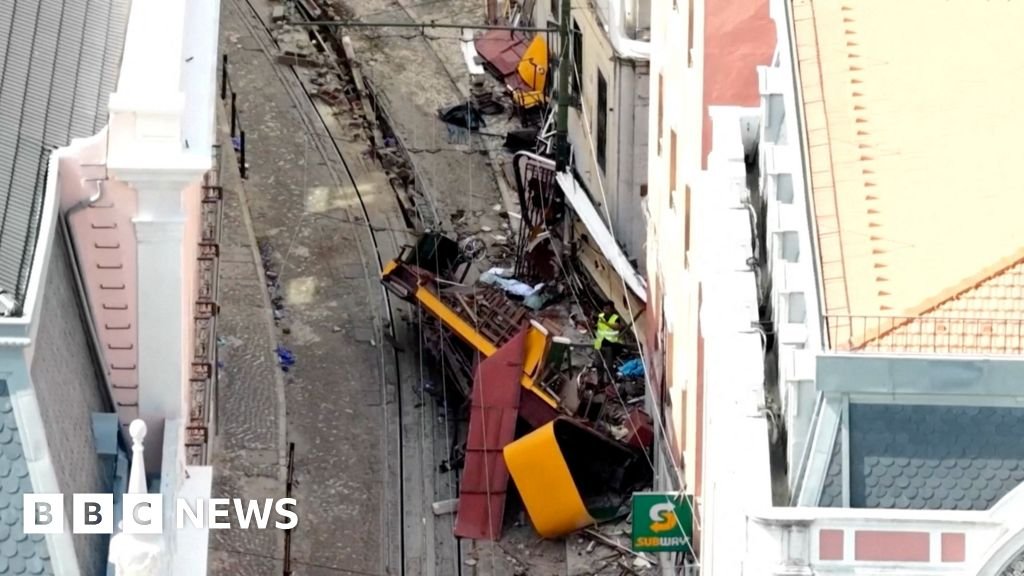
A preliminary report into last month’s Lisbon funicular crash that killed 16 people has detailed numerous failings.
Portugal’s Air and Rail Accident Investigation Bureau said an underground cable – which acted as a counterweight between two carriages and broke, causing the crash – was faulty and had never been certified to carry passengers.
It said the cable was not technically suitable and was acquired in 2022 by Carris, the company that runs Lisbon’s public transport.
The 140-year-old Glória funicular, popular with tourists, derailed and crashed into a building on September 3.
Among those killed were 11 foreigners, including the three British citizens, and another 20 people were injured.
The preliminary report released Monday said there was no oversight by Carris engineers and the cable was not tested before it was installed.
The supervision and maintenance of the funicular by a company commissioned by Carris also did not work properly – it apparently gave the Glória funicular a clean sweep on the morning of the disaster, although it is not certain whether the inspection actually took place that day.
The emergency braking system, which the driver correctly attempted to engage when the cable snapped, did not function properly and was never tested beforehand, the report said.
However, the preliminary report stresses that the information gathered so far is “incomplete” and further testing and analysis is needed.
“The fault or responsibility of any organization or person involved in the incident should not be assumed,” it said.
Lisbon Mayor Carlos Moedas, who was re-elected on October 12 despite accusations from the opposition that he failed to fulfill his duty to control the city’s funiculars, told SIC television that the report “reaffirms that the unfortunate tragedy … was due to technical and not political reasons”.
Karis issued a statement stressing that “it is not possible at this time to say whether the discrepancies in the use of the cable were relevant to the accident,” referring to a passage in the report that noted that the same cables had been used on the Glória funicular for 601 days without incident.
“At this time, it is not possible to say whether the use of this type of non-conforming cable intervened or how it contributed to the rupture … and it is certain for the investigation that there were other factors that should have intervened,” the statement added.
The company emphasized that although the cables were commissioned under the current board of directors, which took office in May 2022, the acquisition process took place under the previous board.
The full report will take about 11 months to complete. If this is delayed, a more detailed interim report will be published instead.
In the meantime, all Lisbon lifts have been ordered to be suspended until the necessary safety checks have been carried out.


