Physical Address
304 North Cardinal St.
Dorchester Center, MA 02124
Physical Address
304 North Cardinal St.
Dorchester Center, MA 02124

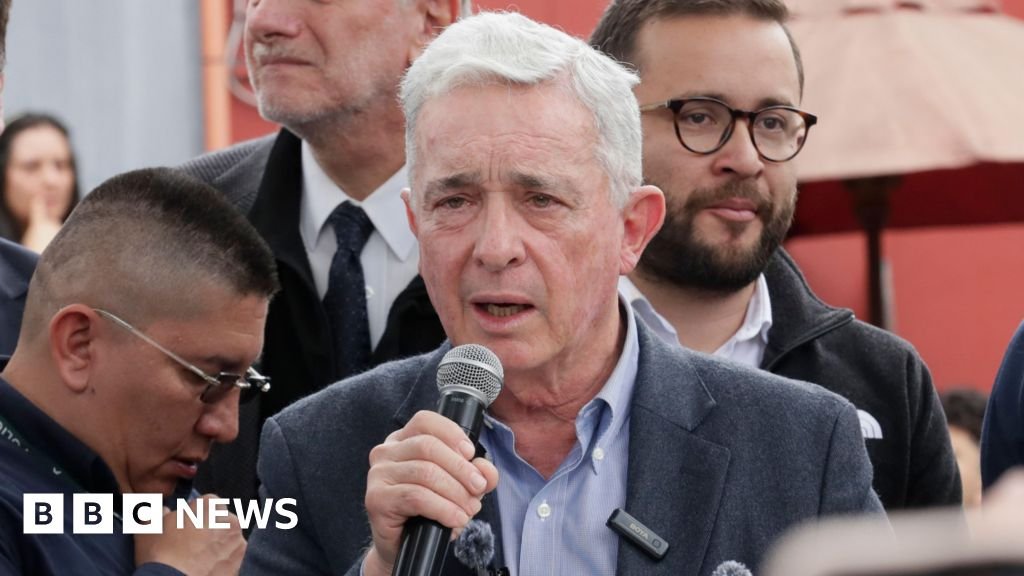
The former Colombian president had two convictions for fraud and bribery overturned after he was sentenced to 12 years under house arrest.
Alvaro Uribe became the first Colombian leader to be convicted of a crime after a trial in August in which a judge gave the 73-year-old the maximum sentence.
The case against him related to allegations that he ordered a lawyer to bribe detained paramilitaries to discredit allegations that he had links to their organizations. Uribe has always maintained his innocence.
The right-wing politician, who was president between 2002 and 2010, is best known for waging an aggressive offensive against the leftist FARC rebels and remains an influential figure in the South American nation.
US Secretary of State Marco Rubio previously criticized Uribe’s sentence, saying his only crime “was tirelessly fighting and defending his country”.
Uribe was originally convicted in part on the testimony of former paramilitary commander Luis Carlos Velez, who said he received bribes from the president’s lawyer, Diego Cadena.
But the Supreme Court in the capital Bogota found that the former commander’s testimony was not credible.
In its 700-page ruling overturning the convictions, the court also found that some of the wiretapped phones used to launch an official investigation against Uribe were obtained illegally.
The ruling can be appealed by persons classified as victims in the case.
Colombia’s current and first left-wing president, Gustavo Petro, condemned the result.
He wrote to X: “This is how the history of paramilitary rule in Colombia is covered up, that is, the history of politicians who came to power in alliance with drug trafficking.”
Paramilitary groups emerged in Colombia in the 1980s to combat the Marxist-inspired guerrilla groups that had been fighting the state since the 1960s.
Many of the armed groups that have developed in the conflict profit from the cocaine trade. Deadly battles between them and with the state have spawned enduring rivalries for traffic routes and resources.
Right-wing paramilitary groups have been held responsible for massacres, disappearances and other atrocities.
Some leftist guerrilla groups have also been involved in massacres and threats against Colombian citizens, according to Human Rights Watch.


