Physical Address
304 North Cardinal St.
Dorchester Center, MA 02124
Physical Address
304 North Cardinal St.
Dorchester Center, MA 02124

Sean Seddon,
Wahiba Ahmed and
Anna Foster
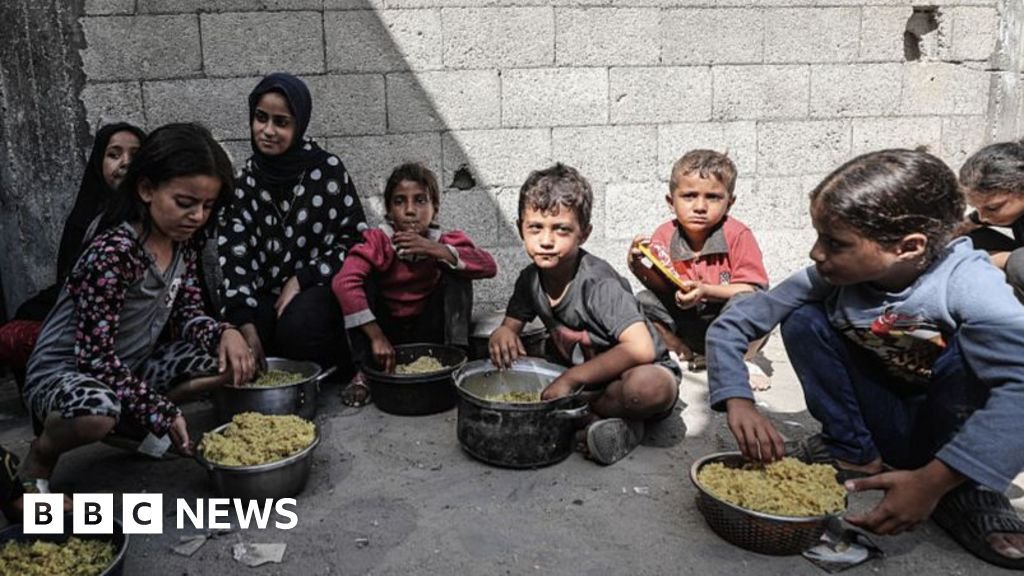
Gaza is experiencing a health “catastrophe” that will last “for generations to come,” the director-general of the World Health Organization (WHO) has warned.
Dr Tedros Adhanom Ghebreyesus told BBC Radio 4’s Today program that a huge increase in aid was needed to begin to meet the complex needs of the Strip’s population.
Israel has allowed more medical supplies and other aid to enter Gaza since the truce with Hamas took effect on October 10, but Dr Tedros said the levels were below what was needed to rebuild the territory’s health system.
His intervention comes as the US tries to strengthened the truce he helped to achieve following the outbreak of violence over the weekend.
The agreement was described by the White House as the first phase of a 20-point peace plan that includes increasing the amount of aid going into Gaza and supplies distributed “without interference” from both sides.
Dr Tedros told the Today program he welcomed the ceasefire agreement but said the subsequent increase in aid was less than expected.
Asked about the situation on the ground, he said Gazans have experienced starvation, “tremendous” injuries, a collapsed health care system and outbreaks of disease fueled by the destruction of water and sanitation infrastructure.
He continued: “On top of that (there is) limited access to humanitarian aid. This is a very fatal combination, so it makes (the situation) catastrophic and beyond description.”
Asked about the long-term health outlook in Gaza, he added: “If you take hunger and combine it with a mental health problem that we see is widespread, then the situation is a crisis for future generations.”
Tom Fletcher, head of the UN Office for the Coordination of Humanitarian Affairs, said earlier this week that aid groups are “turning the tide of the hunger crisis” but that “much more” is needed.
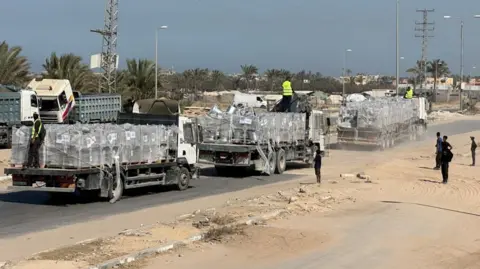
On Tuesday, the U.N.’s World Food Program said trucks carrying more than 6,700 tons of food had entered since Oct. 10, but that was still well below the target of 2,000 tons a day.
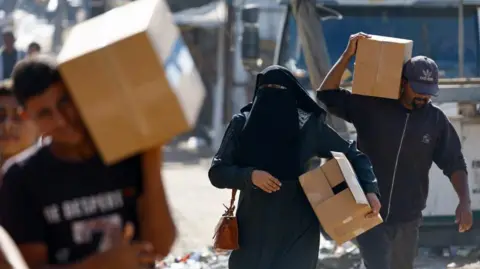
Six hundred aid trucks a day are due to arrive in Gaza, but the average is between 200 and 300, Dr Tedros said, as he urged Israeli authorities to “break the link” between aid and the wider conflict.
 Reuters
On Sunday, Israel temporarily halted aid deliveries after it said two Israeli soldiers had been killed in an attack by Hamas militants in Gaza. At the time, Hamas said it was unaware of the clashes.
The Israeli army responded with a series of airstrikes across the territory, killing dozens of Palestinians.
Aid deliveries resumed the next day after intense international pressure.
Dr Tedros said the aid should not be “weaponised” and urged Israel not to impose conditions on its delivery, including the return of the remains of dead hostages still in Gaza, which has become a key point of contention during the ceasefire.
Hamas has pledged to return the bodies, but has so far transferred only 15 of the 28, saying it has failed to return the rest.
Twenty live Israeli hostages were released by Hamas last week in exchange for nearly 2,000 Palestinian prisoners and detainees in Israeli jails.
Dr Tedros told Today: “There should be full access, there should be no conditions, especially since all the living hostages have been released and much of the remains have been transferred. I did not expect there to be further restrictions.”
Asked about the role the US should play, Dr Tedros said “since the US brokered the peace agreement, it has a responsibility to ensure that all parties respect it”.
Israel currently operates two crossings, Kerem Shalom in the southeast and Kisufim in central Gaza, but continues to receive calls from humanitarian groups to restore all access routes it controls.
Dr Tedros said “all available crossing points” were needed to get enough aid into Gaza and called on Israel to allow aid groups previously denied registration back into the territory, saying: “You cannot have a scaled response without those who can deliver on the ground.”
 Reuters
He also said supplies intended to be used to rebuild Gaza’s health system were confiscated at the border because Israeli authorities said they could have military uses.
“If you’re going to build a field hospital, you need the canvas and the (tent) poles,” he continued. “So if the poles are removed, on the pretext that they can be dual-use, then you can’t have a tent.”
Thousands of Palestinians are waiting for weekly medical evacuation flights, Dr Tedros said, although none have taken off for two weeks because of Israel’s religious holidays. He said 700 people had previously died while waiting for medical evacuation and called for the number of flights to be increased.
Israel launched a military campaign in Gaza in response to the October 7, 2023 attack in which Hamas-led gunmen killed around 1,200 people and took 251 others hostage.
At least 68,229 have been killed by Israeli attacks in Gaza since then, according to the territory’s Hamas-run health ministry.
In July, a UN-backed body concluded that a famine had occurred in Gazaalthough Israel disputed the findings, saying there was “no famine”.
The UN previously estimated that rebuilding Gaza would cost $70bn (£52bn). Dr Tedros said about 10% of that figure would have to be spent on the severely damaged health system.
And he continued: “We have long said that peace is the best medicine.
“The truce we have is very fragile and some people died even after the ceasefire because it was violated several times.
“It’s very sad that many people cheered in the streets because they were very happy that there was a peace agreement. Imagine, (some of) those same people are dead after being told that the war is over.”