Physical Address
304 North Cardinal St.
Dorchester Center, MA 02124
Physical Address
304 North Cardinal St.
Dorchester Center, MA 02124

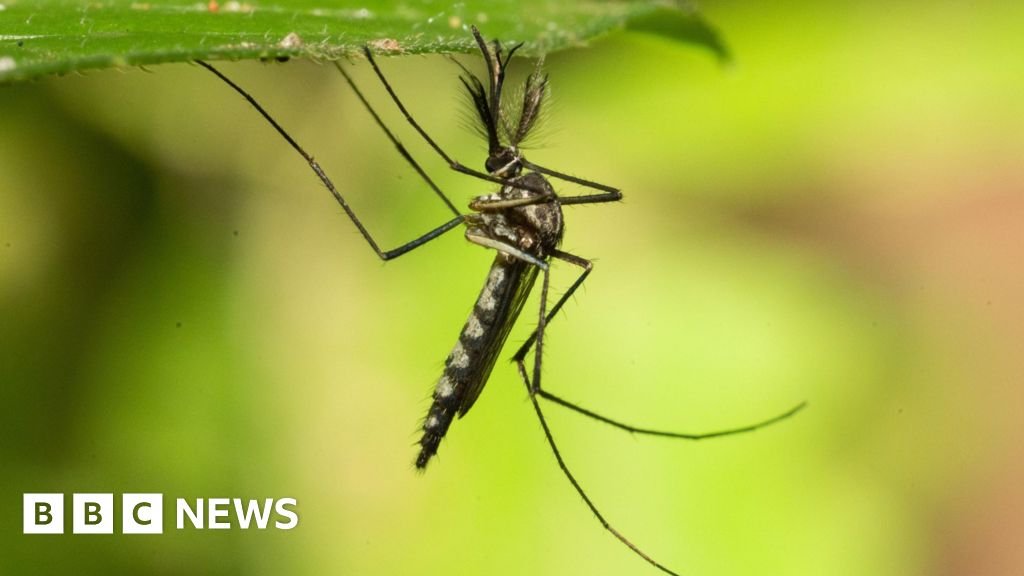
Mosquitoes have been spotted in Iceland for the first time since the country suffered record heat this spring.
Insect enthusiast Björn Hjaltason came across the mosquitoes several nights last week while using wine-soaked ropes to observe moths, local media reported.
Mr Hjaltason found two female mosquitoes and one male, which were later confirmed to be Culiseta annulata, one of the few species that can successfully survive the winter.
Iceland was one of only two mosquito-free havens in the world before the discovery, partly because of its cold climate. The only other recorded mosquito-free area is Antarctica.
The mosquitoes were found in Kjós, a glacial valley southwest of the Icelandic capital, Reykjavik.
Mr Hjaltason shared news of his discovery on a local wildlife Facebook page along with photos of the insects, describing a “strange fly on a red wine ribbon”, according to Icelandic media.
“I can tell right away that this is something I’ve never seen before,” he said in the post, which was a screenshot and shared by Icelandic news site Morgunblaðið, adding that “the last stronghold seems to have fallen.”
Mr Hjaltason sent the insects to the Icelandic Institute of Natural History to be identified, where entomologist Matthías Alfreðsson confirmed his suspicions.
The species is common in parts of Europe and North Africa, but it is not clear how it reached Iceland, Alfredsson told CNN.
Iceland’s cold climate and lack of stagnant water in which the insects can breed are key factors in the country’s previous lack of mosquitoes, the World Population Survey said.
But this year, the country has broken multiple records for high temperatures.
Normally, Iceland rarely experiences highs above 20C (68F) in May, and when it does, those heatwaves will last no more than two to three days, the Met Office notes. However, this threshold was exceeded for 10 consecutive days this year in different parts of the country.
Iceland also saw its hottest day in May, with temperatures reaching 26.6C (79.8F) at Eglisstaðir Airport.
A June study published by the Global Heat Health Information Network noted that such changes could have “significant” impacts on delicate ecosystems that have adapted to cold climates and are sensitive to temperature changes.
Last year was the world’s hottest on record, and the UN climate body found that human influence has “unequivocally” warmed the atmosphere, oceans and land.
Additional monitoring will be needed in the spring to see if the mosquito species “has really become established in Iceland,” Alfredsson added.
Meanwhile, Hjaltason speculated about the origin of the specimens he observed.
“One always suspects Grundartangi – it’s only about six kilometers from me and things often arrive by ship and container, so it’s possible something came that way,” he told Morgunblaðið.
“But if three of them walked straight into my garden, there were probably more.”


