Physical Address
304 North Cardinal St.
Dorchester Center, MA 02124
Physical Address
304 North Cardinal St.
Dorchester Center, MA 02124

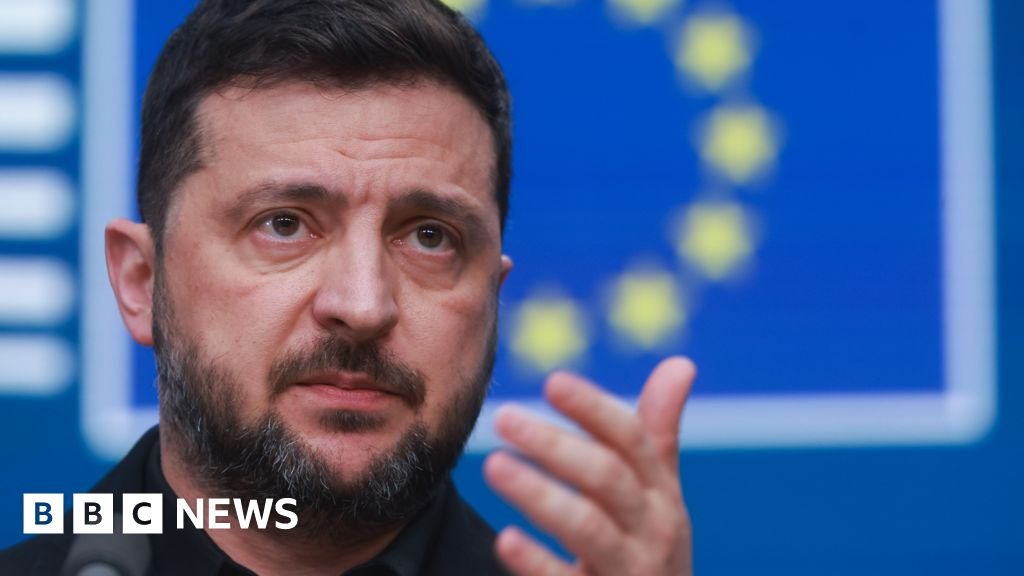
Ukraine’s president has called on the European Union to back a plan to release billions of euros in frozen Russian cash to help finance the country’s defense.
As EU leaders met in Brussels, Volodymyr Zelenskiy said he hoped they would take a “positive decision” on the use of 140 billion euros (122 billion pounds) in Russian assets currently held in a Belgian clearing house.
The controversial move will be on top of sanctions the bloc has imposed on Russia – the latest on Thursday targeting the Kremlin’s oil revenues.
They followed US measures against Russia’s oil industry earlier, the first time President Donald Trump has sanctioned Moscow as he grows frustrated with President Vladimir Putin’s refusal to end the war.
On Wednesday evening, the US president confirmed that the planned meeting with Putin in Budapest had been postponed indefinitely.
“Every time I talk to Wladimir, I have good talks and then they don’t go anywhere,” he said.
The US sanctions targeted Russian oil giants Rosneft and Lukoil. In response, Putin said that the US’s “hostile” measures “will have certain consequences, but they will not significantly affect our economic well-being.”
Oil is one of Russia’s biggest exports. Ukraine wants to use long-range missiles to attack Russian oil and energy plants.
Zelensky had hoped to secure Tomahawk cruise missiles from the US, but Trump last week rejected the request because the weapons are “very complex” and require a year of intensive training to use.
Putin warned the US of a “very strong” response if Washington allowed Ukraine to attack Russia with Tomahawks. He said strikes deep into Russia would be seen as an escalation.
On Thursday, European ministers held talks on how frozen Russian money worth billions of euros could be made available to Ukraine as a so-called “reparations loan”.
Zelensky, who attended the summit in Brussels, said: “I hope they will make a political decision, a positive decision one way or another to help Ukraine with funds.
“Russia brought war to our land and they must pay for that war,” he said.
There are a number of legal complications surrounding the use of Russia’s money.
Belgium, in particular, has been reluctant to support the use of frozen assets because it is nervous about having to bear the consequences if Russia legally challenges Euroclear, the clearinghouse where the money is held.
The EU’s foreign affairs chief, Kaia Callas, admitted there were “some problems” about the use of the loan assets.
But she said: “The main message is that Russia is responsible for the damage in Ukraine and must pay.”
Russia criticized the idea. “Any confiscation initiatives from Brussels will inevitably lead to a painful response,” Russian Foreign Ministry spokeswoman Maria Zakharova said.
The EU’s latest measures against Russia target three Chinese companies, including two oil refineries and an energy trader, which are “significant buyers of Russian crude”.
The measures “are intended to deprive Russia of the means to finance this war,” Callas said, as well as to send a message, in particular, that “Russia cannot outlive us,” she said.
China condemned the decision, which a commerce ministry spokesman said “seriously undermines the overall framework of economic and trade cooperation between China and the EU”.


