Physical Address
304 North Cardinal St.
Dorchester Center, MA 02124
Physical Address
304 North Cardinal St.
Dorchester Center, MA 02124

Nick Davis,Mandeville, Jamaica and
Rachel Hagan
 Getty Images
The scale of the devastation left by Hurricane Melissa is becoming clear after the record-breaking storm slammed into Jamaica, Haiti and Cuba, leaving at least 32 dead.
Although downgraded from a Category 5 to a Category 1 storm, Melissa gathered speed as it passed through the Bahamas on Thursday and was later expected to reach Bermuda.
The strongest storm to hit the Caribbean island in modern history, the hurricane sustained winds of 298 km/h (185 mph) at its peak – stronger than Hurricane Katrina, which devastated New Orleans in 2005, killing 1,392 people.
The US National Hurricane Center (NHC) reported sustained winds of 165 km/h at 0900 GMT on Thursday.
 AFP via Getty Images
It warned of possible coastal flooding as the storm accelerated to the northeast.
Bahamas authorities have since lifted hurricane warnings for the central and southern islands, as well as the Turks and Caicos.
The country’s minister of state for disaster risk management, Leon Lundy, urged residents to remain vigilant, saying: “Even a weakened hurricane retains the capacity to bring serious devastation.”
Nearly 1,500 people were evacuated from vulnerable areas in what officials described as one of the largest operations in the history of the Bahamas.
Although the floods devastated parts of the archipelago, the tourism ministry said most of the country – including Nassau, Freeport, Eleuthera and the Abacos – remained largely unaffected and open to visitors.
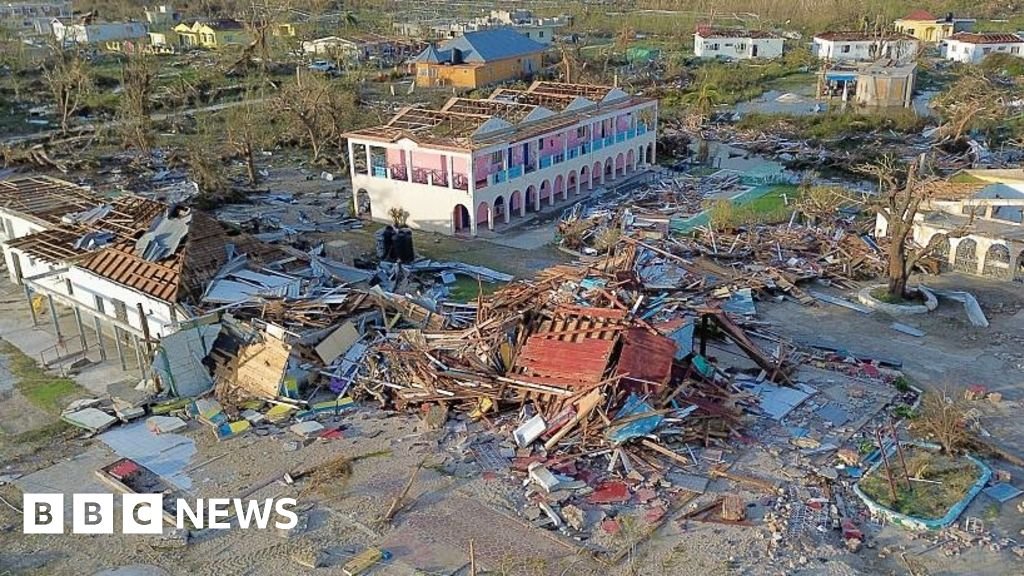
Across the Caribbean, Melissa’s powerful winds ripped apart homes and buildings, uprooted trees and left tens of thousands without power.
In Cuba, residents of the country’s second-largest city, Santiago de Cuba, worked with machetes to clear streets littered with debris. President Miguel Diaz-Canel said the hurricane had caused “significant damage” but gave no casualty figures.
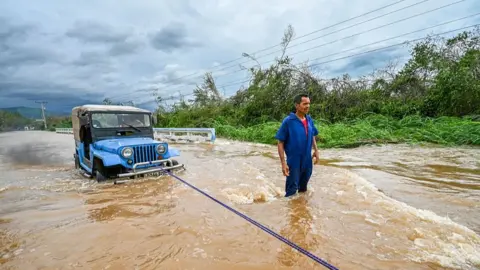
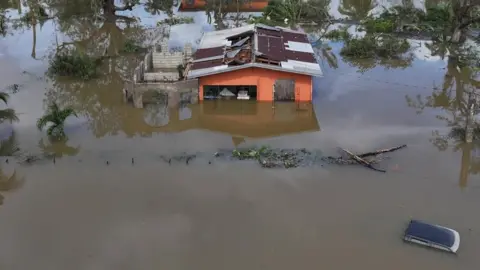
In Jamaica, the impact was worst in the southwestern parish of St. Elizabeth, where knee-deep mud and washed-out bridges left towns like Black River cut off. On the way west from the capital city of Kingston we saw minimal damage – some downed structures, trees scattered across roads and gardens.
 Reuters
But once we arrived in central Jamaica, we began to see just how hard the island had been hit. The town of Mandeville is, for lack of a better word, run to the ground. A gas station lost its roof and most of its pumps.
Dana Malcolm of the Jamaica Observer described “very, very slow progress” on roads still blocked by landslides when St. Elizabeth was reached. She told the BBC: “Yesterday I was standing on what used to be a high street and I was up to my knees in mud where the road should have been.”
Communications in Jamaica are almost down, with power lines and mobile networks down in much of the southwest. Many families have spent days unable to contact relatives in the worst-hit parishes.
In Black River, the New York Times reported, a relative of one victim walked 15 miles (24 km) to the police station to report their loved one’s death.
Desmond McKenzie, Minister for Local Government, shared the news that “in the midst of all this, a baby was safely delivered in an emergency. So there’s… baby Melissa.”
Haiti, already mired in gang violence and a humanitarian crisis, suffered at least 23 deaths – 10 of them children – mainly due to flooding after days of relentless rain, although the country avoided a direct hit.
The storm was also responsible for at least eight deaths in Jamaica and one in the Dominican Republic, officials said.
The NHC said flooding in the Bahamas is expected to subside by Thursday, although conditions in Cuba, Jamaica and Hispaniola will remain hazardous for several days.