Physical Address
304 North Cardinal St.
Dorchester Center, MA 02124
Physical Address
304 North Cardinal St.
Dorchester Center, MA 02124

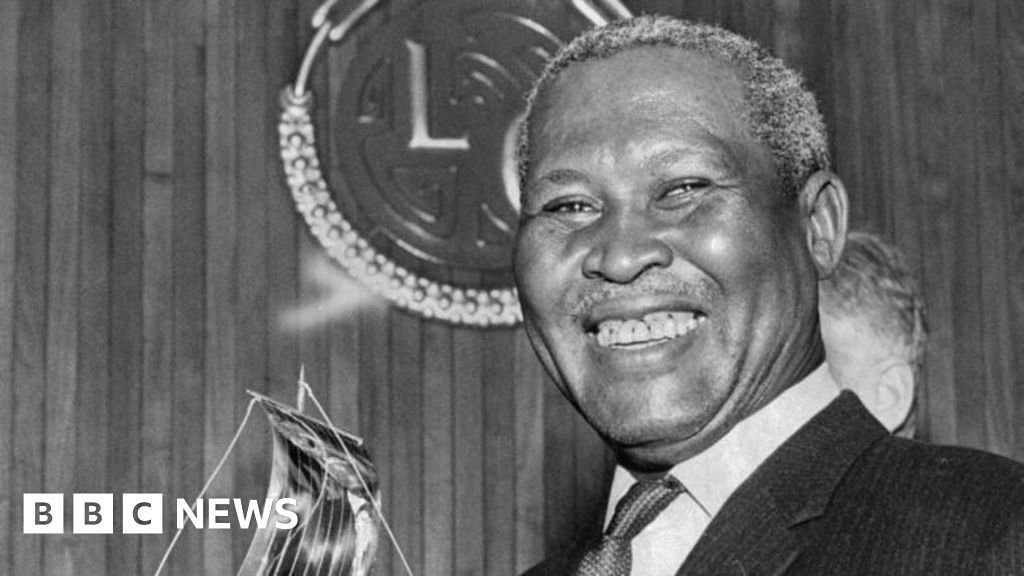
A South African court has ruled that the death of Nobel laureate Albert Luthuli in 1967 was the result of an “assault” by apartheid police, rejecting decades of claims that it was an accident.
An inquest held during the apartheid government concluded that Luthuli, the first African to win the Nobel Peace Prize, died after being hit by a freight train while walking on a railway line.
But activists and his family have long questioned the findings, and the South African government reopened the case this year.
A judge on Thursday ruled that the anti-apartheid hero died as a result of a fractured skull and brain haemorrhage linked to an attack. His family welcomed the verdict.
Luthuli, who at the time of his death was the leader of the then banned African National Congress (ANC), won the Nobel Peace Prize in 1960 for leading the struggle against apartheid.
The ANC continued to lead the struggle against white minority rule and came to power in 1994 after the first democratic elections.
The South African National Prosecutor’s Office in April reopened a new investigation into Luthuli’s death as family and activists suspected that the apartheid authorities had killed him and covered him up.
Passing sentence on Thursday, Judge Nompumelelo Radebe said the evidence presented at the re-inquest did not support the conclusions of the 1967 inquiry.
“The deceased was found to have died as a result of skull fracture, cerebral haemorrhage and concussion related to an assault,” Judge Nompumello ruled.
The judge said Luthuli’s death was the result of an “assault by members of the Special Security Branch of the South African Police acting in concert and with a common objective with officers of the South African Railway Company”.
She named seven men whose whereabouts “could not be ascertained” as perpetrators or accomplices in the murder. If found, they could face criminal charges.
After the sentence was read, a spokesman for the Luthuli family called it “the first part of finally getting justice”.
ANC national spokesperson Mahlengi Bhengu also welcomed the court’s decision, which she said “corrects a long-standing distortion of history”.
“This decision brings justice, truth and dignity to the memory of one of South Africa’s greatest sons and to all those who suffered under the brutality of apartheid,” Bhengu added.
The case in the Pietermaritzburg High Court is the latest in renewed efforts by South African authorities to secure justice for victims of apartheid-era crimes and closure of their families.
Last month, South African prosecutors reopened an inquest into the death of anti-apartheid leader Steve Bikowho died in police custody in 1977 after being tortured.
In May, President Cyril Ramaphosa set up a judicial commission of inquiry to look into allegations of undue influence in delaying or obstructing the investigation and prosecution of apartheid-era crimes.


