Physical Address
304 North Cardinal St.
Dorchester Center, MA 02124
Physical Address
304 North Cardinal St.
Dorchester Center, MA 02124

Rachel Hagan and
Imogen Fulks,Correspondent in Geneva
 EPA-EFE/REX/Shutterstock
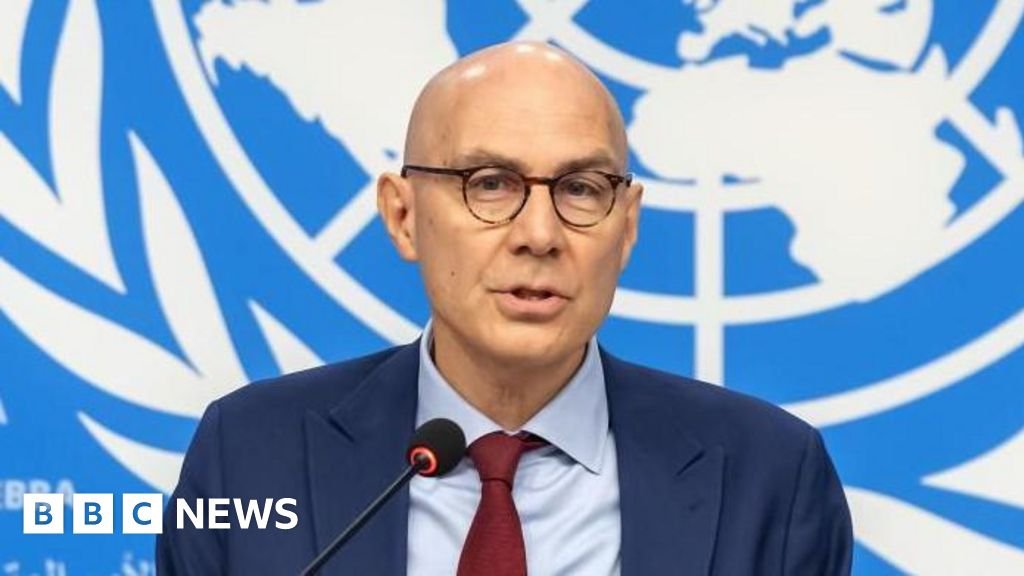
The UN human rights chief condemned the US military’s strikes on ships allegedly carrying drugs in the Caribbean and Pacific, saying the deadly attacks violated international law and amounted to “extrajudicial killing”.
Volker Turk said on Friday that more than 60 people had been killed in US strikes since early September.
Calling the attacks “unacceptable,” he said Washington must stop them immediately and conduct swift, independent and transparent investigations.
President Donald Trump has said the strikes are necessary to stop the flow of drugs into the US and he has the legal authority to continue bombing boats in international waters.
Defense Secretary Pete Hegseth said the strikes were on ships operated by drug-trafficking groups designated as terrorist organizations by the US, saying this week that “the Western Hemisphere is no longer a safe haven for narco-terrorists who bring drugs to our shores to poison Americans.”
Turk, while acknowledging the challenges of tackling drug trafficking, said in a statement that the circumstances of the deadly strikes “find no justification in international law”.
“Combating the serious problem of illicit drug trafficking across international borders is – as has long been agreed between States – a matter of law enforcement governed by the careful limitations on lethal force set out in international human rights law.”
Under the law, the deliberate use of deadly force “is permissible only as a last resort against persons who pose an immediate threat to life,” he said.
He added that based on “the very limited information publicly provided by US authorities, none of the individuals on the targeted boats appear to pose an immediate threat to the lives of others”.
He urged the US to use law enforcement methods, including intercepting boats and detaining suspects and, if necessary, prosecuting individuals.
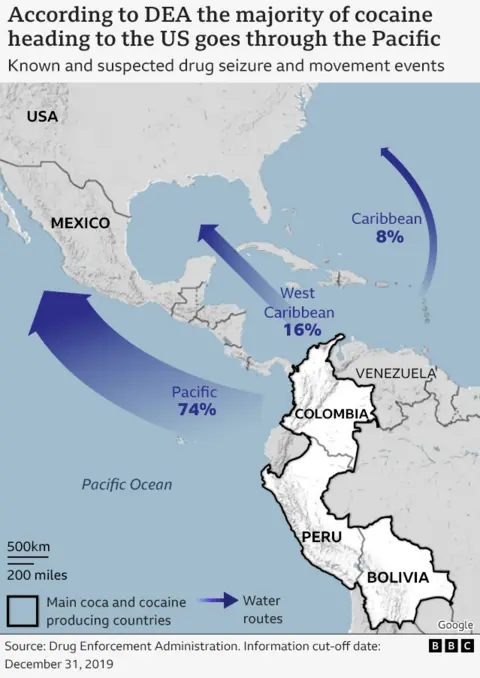
Most of the strikes have occurred off the coast of South America in the Caribbean, although attacks in the Pacific Ocean this week have killed at least 18 people, according to Hegseth.
The US has deployed troops, aircraft and naval vessels to the Caribbean and last week ordered the world’s largest warship, the USS Gerald R Ford, to the area.
The strikes drew condemnation in the region and experts questioned their legality. Members of the US Congress, both Democrats and Republicans, have also expressed concern and questioned the president’s authority to order them.
Mexican President Claudia Sheinbaum said her government did not “concur with these attacks” and called for meetings with the US ambassador, insisting “all international treaties be respected”.
 BBC News
The US actions also increased tensions between Washington and the governments of Colombia and Venezuela.
The US has imposed sanctions on Colombian President Gustavo Petro, accusing him of failing to curb drug trafficking and allowing cartels to “thrive”. Petro replied that he has been fighting drug trafficking “for decades”.
Trump also accused Venezuelan President Nicolas Maduro of running a drug-trafficking organization, which he denies.
of Venezuela the attorney general told the BBC “there is no doubt” that Trump is trying to overthrow the government of Venezuela. He accused the US of hoping to seize the country’s natural resources, including reserves of gold, oil and copper.
The US is among many nations that do not recognize Maduro as Venezuela’s legitimate leader after the latest elections in 2024 were widely dismissed as neither free nor fair. Opposition counting from polling stations showed its candidate won by a landslide.