Physical Address
304 North Cardinal St.
Dorchester Center, MA 02124
Physical Address
304 North Cardinal St.
Dorchester Center, MA 02124

 Fritz Pinow
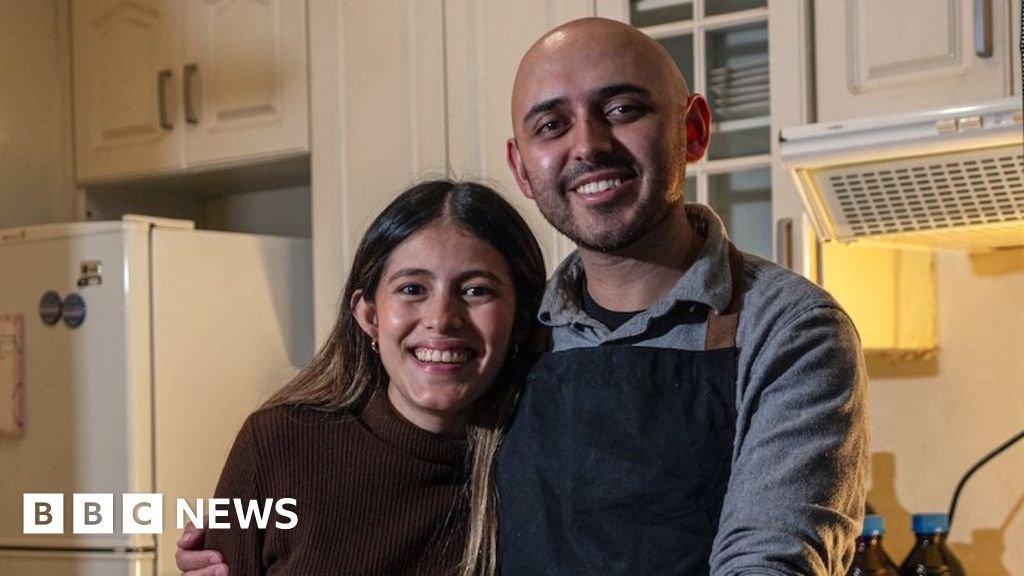
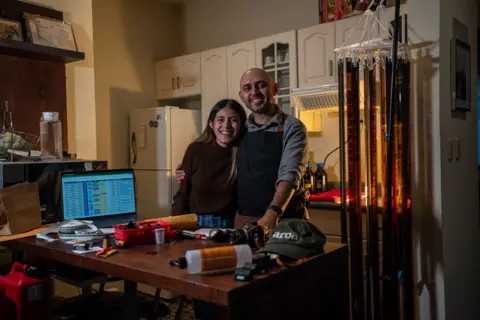
“It all started as a little passion project,” says Fabrizio Díaz, 28, who with his wife, Lucia Ramírez, 25, run the only fully operational photo film developing lab in Central America from their apartment in Guatemala City.
“We now have over 60 customers a month and have developed over 800 rolls this year alone,” he adds.
 Fritz Pinow
Arca Film Lab was in high demand this year and is the only photo film developing lab in Central America that develops any type of analog photographic film that involves the rather complex process of developing positives in a process known as E-6.
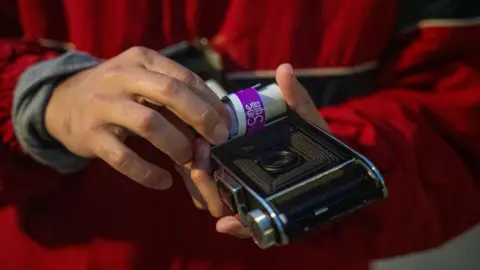
Fabrizio, who studied cinematography, explains that the great inaccessibility of high-quality film development services in Central America gave him the first decisive impetus to learn how to develop his first film.
 Fritz Pinow
“When we started experimenting and developing film in our apartment, friends started asking us to develop film for them and it kind of took off,” recalls Lucia.
And so, Arca Film Lab was born in September 2023. as a simple Instagram page offering film development services in Guatemala.
 Fritz Pinow
The couple learned most of the skills needed to develop films by watching YouTube videos and by contacting other film labs internationally and asking for advice.
“We were surprised that so many people answered our questions. Many of the veterans of the photo development world helped us by sharing their experience and tricks. We are really grateful for that,” says Fabrizio.
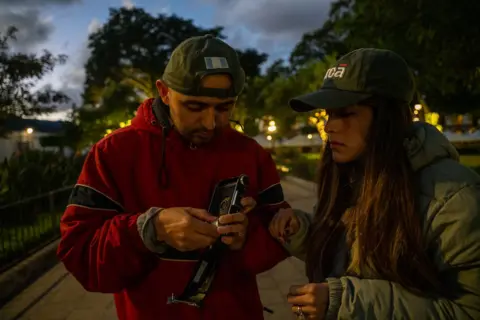
However, Fabricchio and Lucia’s love for photography is not limited to developing film. The couple also organizes “photo walks” where a group of people gather in Antigua, the old center of Guatemala City, to take pictures and experiment with old analog cameras.
 Fritz Pinow
For young analog photography enthusiasts like Ivan Ortiz, 22, taking pictures with a camera that’s older than him gives him something that modern cameras can’t compete with.
“It’s like we’re nostalgic for a generation we never belonged to,” he told the BBC.
Ivan says older people don’t always get the hype for old cameras and film. “They just don’t understand our perspective,” he explains.
“We live in a world where everything is digital and fast. With analog photography, I have to make conscious decisions about my photos and focus solely on the act of photographing. And the best part about it is that you then have something physical and not just another data file,” he adds.
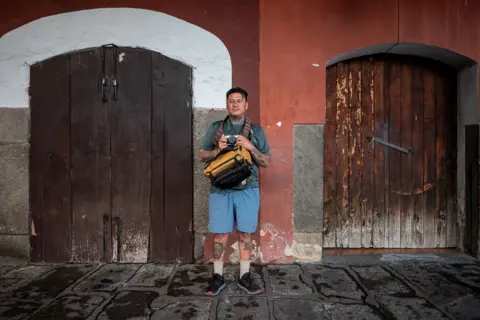
Having physical photos to hold is also something that Steven Lopez from the US highlights as an advantage of analog photography.
 Fritz Pinow
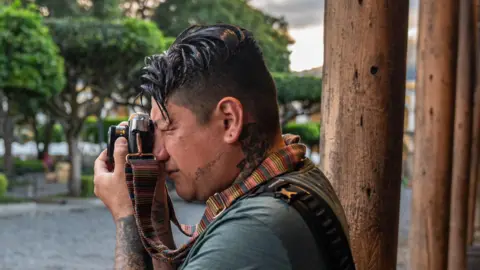
The 33-year-old travels across Central America to document the last traces of Mayan culture and always carries a 35mm analog camera with him.
“Photography, and especially analog photography, is simply the best way to document and experience cultures. Every time I come back from a trip and get the developed film back, it’s like Christmas!” he tells the BBC.
 Fritz Pinow
The community of analog photography enthusiasts in Central America may be growing rapidly, but the challenges are greater than elsewhere.
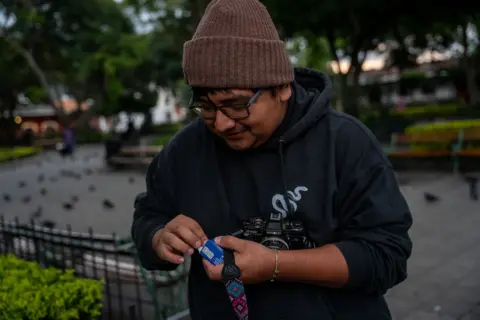
“It’s really hard to find analog cameras here, and it’s even harder to find them in good condition,” explained Ronald Ottoniel, 26, who went on the photo walk to buy new rolls of film and hand in others to be developed.
 Fritz Pinow
There are other obstacles.
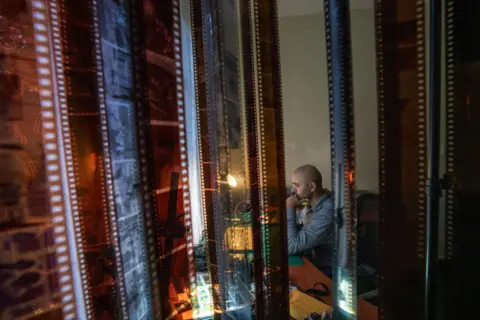
Fabrizio and Lucia explain that the process of purchasing and importing the chemicals needed to develop positive film was extremely complicated, as the importation of these chemicals is closely monitored by the state and requires special permits, making it an excruciatingly long ordeal.
“A lot of other labs don’t offer the E-6 processing just because it’s so complicated to import the chemicals,” says Fabrizio.
 Fritz Pinow
Their business may be expanding, but Fabricchio and Lucia are determined to make sure it doesn’t lose the personal touch and passion that inspired it in the first place.
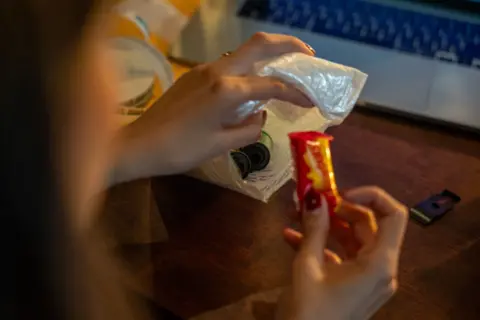
Lucia explains how sometimes customers “put little sweets in the packages they send us, and sometimes we send back a handwritten note.”
 Fritz Pinow
“It’s important to us that this is not a mass production business, but that each customer is (treated as) an individual,” she adds.
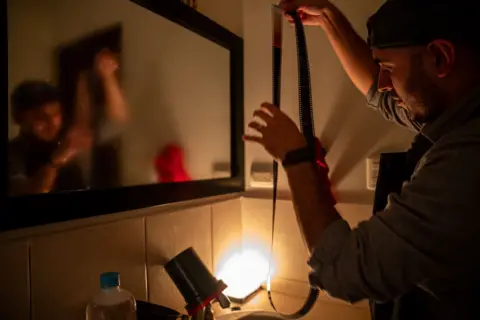
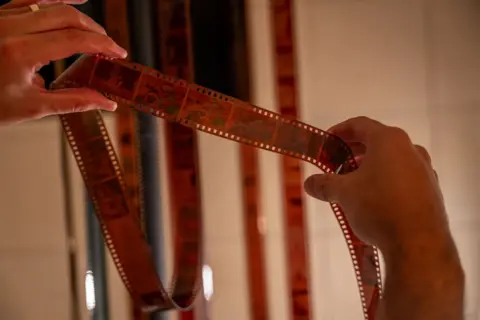
All over the world, photo labs use large machines that develop film almost completely automatically, but in Fabricho and Lucia’s modest apartment, the process is very “hands-on.”
 Fritz Pinow
For color and positive (E-6) film, the temperature of the chemicals and the time the film is exposed to them must be just right or the entire roll of film will turn out badly.
“The beginning was definitely not easy with this whole process, but after developing over 800 rolls of film, these processes became like second nature to us,” recalls Fabrizio.
“But the first time we developed the positive films, the E-6 process, we were so nervous because we had invested so much in the chemicals and the roll. But when it turned out well and we were able to see those vibrant colors of positive film it’s always very exciting,” he adds.
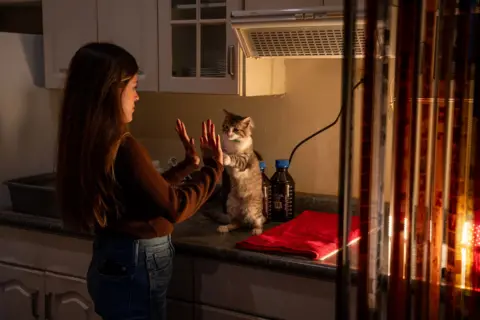
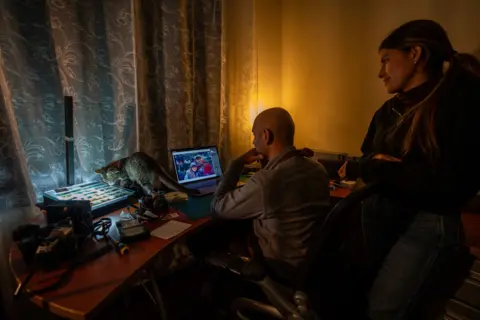
Another indispensable member of the Arca Film Lab is Toto, the four-month-old cat who, according to Fabricchio and Lucia, is in charge of quality control and roams throughout the development process.
 Fritz Pinow
The developed film rolls are then moved from the kitchen to the bathroom, as this is the dustiest space in the house.
There they dry to later be scanned in a high-resolution Nikon scanner, which Fabrizio says is the highest-resolution film scanner in Central America.
Fabriccio and Lucía have already expanded into El Salvador, where they regularly collect and sell film rolls.
 Fritz Pinow
The young couple remain ambitious, and in the future they say they hope to establish a strong relationship with CineStill and Eastman Kodak and expand their business to develop film rolls for cinema, which will involve a complex process known as ECN-2.
“My dream is to revive the classic cinema scene here in Central America! We have so much experience in talent and enthusiasm to offer the world. (…) with Arca Film Lab we started a movement that we want to push further and further,” says Fabrizio.
All photos are by Fritz Pinnow and subject to copyright.



