Physical Address
304 North Cardinal St.
Dorchester Center, MA 02124
Physical Address
304 North Cardinal St.
Dorchester Center, MA 02124

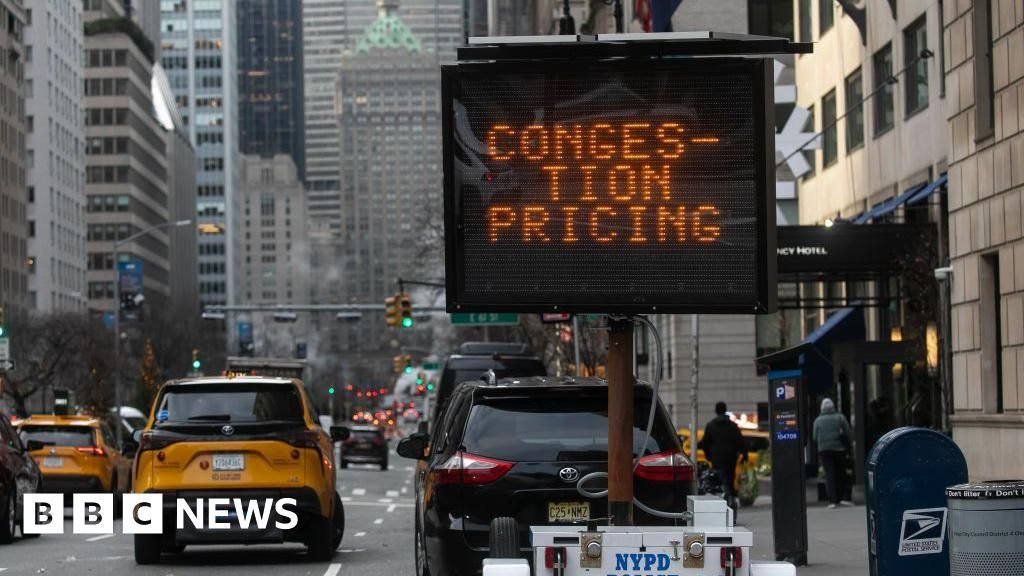
New York City’s traffic has eased since a congestion charging scheme for vehicles went into effect on Jan. 5, transportation officials said.
The Metropolitan Transportation Authority (MTA) said 273,000 fewer cars entered the central business district from Monday to Friday, with traffic down 7.5% compared to forecasts for weekdays in January without the scheme.
The congestion charge – the first of its kind in the US – charges car drivers up to $9 (£7) a day, with different rates for other vehicles.
The congestion zone covers an area south of Central Park, encompassing well-known locations such as the Empire State Building, Times Square, and the financial district around Wall Street.
“Early data backs up what New Yorkers have been telling us all week — traffic is down, streets feel safer and buses are running faster,” said Jano Lieber, who heads the MTA.
Drivers also save time as local and express buses run faster, especially in the morning commute, the MTA posted on X.
The scheme aims to ease New York’s notorious traffic woes and raise billions for the public transport network.
Most drivers are charged $9 once a day to enter the congestion zone during peak hours, and $2.25 the rest of the time.
Small trucks and non-commuter buses pay $14.40 to enter Manhattan during rush hour, while larger trucks and tour buses pay a toll of $21.60.
Although the charge was welcomed by many, it was met with much opposition.
The most prominent opposition came from President-elect Donald Trump, a native New Yorker who has vowed to end the scheme when he returns to office this month.
Last year, New York City was named the world’s most congested urban area for the second year in a row, according to INRIX, a traffic data analysis firm.


