Physical Address
304 North Cardinal St.
Dorchester Center, MA 02124
Physical Address
304 North Cardinal St.
Dorchester Center, MA 02124

 Getty Images
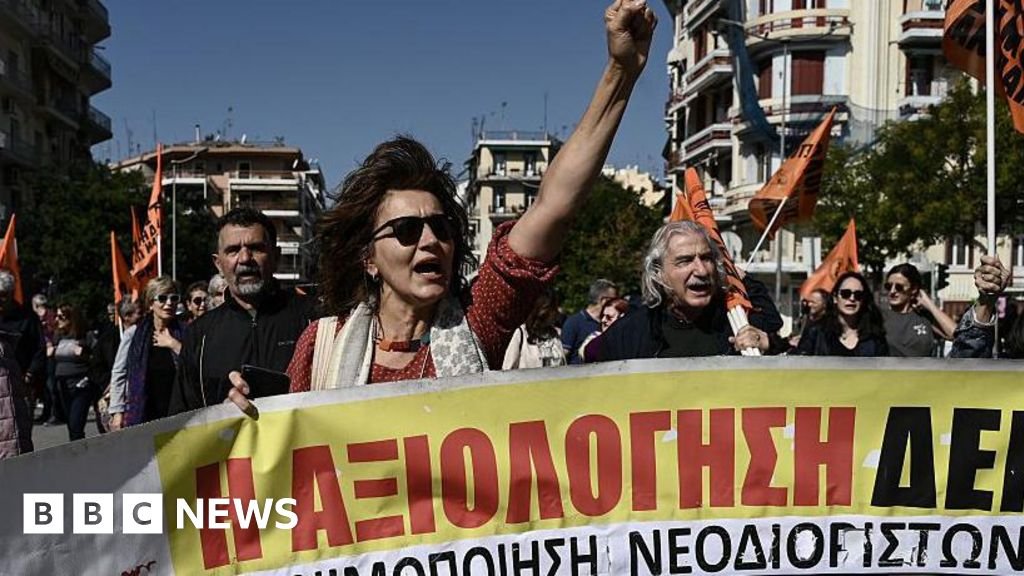
Greece’s parliament has approved a controversial labor bill allowing a 13-hour workday, despite fierce opposition and national strikes.
The government said it would modernize Greek labor laws, but a spokesman for the left-wing opposition Syriza party called the bill a “legislative monstrosity.”
Under the new law, annual overtime is also limited to 150 hours, and the standard 40-hour week remains in effect.
The government insists that the longer working day is not mandatory, only affects the private sector and can only be applied up to 37 days a year.
Thursday’s vote was supported by lawmakers from the ruling center-right New Democracy party, with the center-left Pasok party – now the main opposition – voting against the bill, while the left-wing Syriza party abstained.
Unions staged two general strikes demanding the withdrawal of the bill this month, which brought public transport and services to a standstill.
Labor Minister Niki Kerameus defended the bill, saying the reforms brought Greek law into line with modern labor market realities and accused opposition leaders of misleading the public.
The laws would give workers the option to take on extra hours with the same employer for 40% more pay, while ensuring they can’t be fired for refusing overtime.
This is in line with European Union working time rules, which limit the average week to 48 hours, including overtime, but allow flexibility for 12 months, the government said.
According to officials, the law gives employees the option to work longer for one employer instead of holding multiple part-time jobs, and that participation will remain voluntary.
But opposition parties accused the government of undermining workers’ rights and “taking the country back to the working middle ages”. They say Greek employees already work longer than most Europeans, while earning less and still “struggling to make ends meet”.
The public sector union ADEDY said that flexible working hours in practice meant “abolishing the eight-hour workday, destroying family and social life and legalizing over-exploitation”, AFP news agency reported.
Across the EU in 2024, the longest working weeks in 2024 were recorded in Greece (39.8 hours), followed by Bulgaria (39.0), Poland (38.9) and Romania (38.8).
The shortest working week in the bloc is in the Netherlands (32.1), according to Eurostat.
As of January 2025, the national minimum wage in Greece stood at €968 (£839, $1,127) per month, putting it at the lower end of the EU.
Unemployment, which peaked at 28 percent during the financial crisis, was 8.1 percent in August, compared with an EU average of 5.9 percent, Eurostat data showed.
Greece is recovering from its decade-long debt crisis, which ended in 2018, but wages and living standards remain among the lowest in the EU.