Physical Address
304 North Cardinal St.
Dorchester Center, MA 02124
Physical Address
304 North Cardinal St.
Dorchester Center, MA 02124

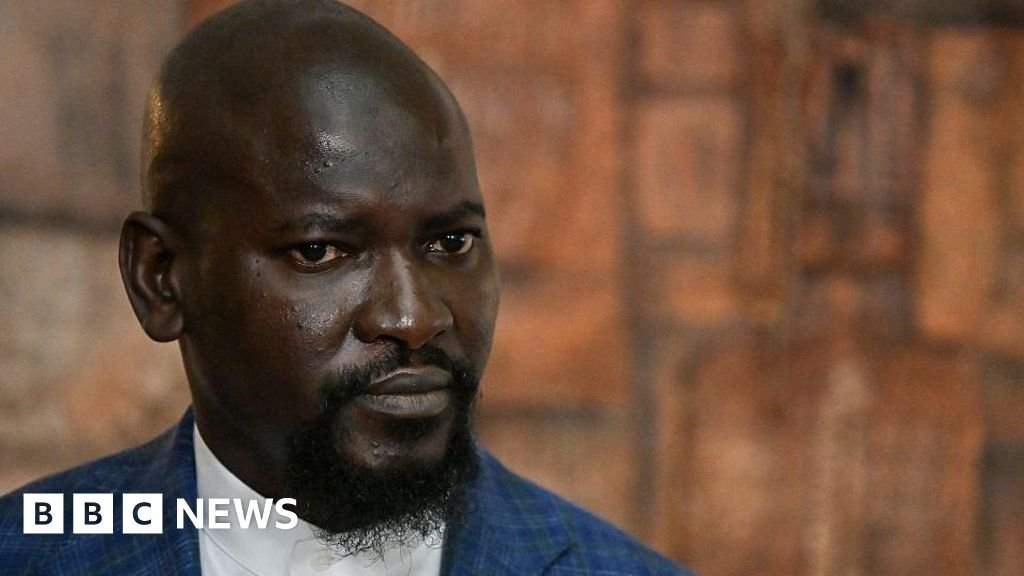
Guineans have reacted with shock after it was announced that presidential candidates will have to pay a deposit of 875 million Guinean francs ($100,000; £75,000) to take part in December’s elections, in which military leaders must hand over power to civilians.
Guinea has been under military rule since Colonel Mamadi Dumbuya seized power in a coup in 2021.
The election is being held under a new constitution that allows Dumbuya to run for president – although he has not announced whether he plans to do so.
While the previous deposit was almost as high – 800 million francs – some analysts hoped it would be reduced to encourage more people to take part in this historic election.
“This amount is huge,” political analyst Kabinet Fofana told the BBC. “This decision reinforces the growing criticism against the overall direction of the election.”
Candidates who receive more than 5% of the votes in the first round of the election will have their deposit returned.
Officials say the high sum is necessary to ensure that only credible candidates take part.
But presidential candidate Faia Milimono says the deposit was much lower.
“Until 2005, the deposit never exceeded 50 million (Guinean francs). The madness started in 2010, when it was considered necessary to block certain candidates. The amount went from 50 million to 400 million, and today we are talking about 900 million.”
Participation costs in the elections are among the highest in the region.
In 2022, Nigeria’s electoral commission set a fee of 100 million naira ($67,000 at the current exchange rate – at the time it was more than $200,000), which drew widespread criticism.
In Cameroon the deposit is $53,000 and in Ivory Coast $90,000.
The electoral body also set a campaign spending limit of 40 billion Guinean francs ($4.6 million; £3.5 million) per candidate.
One candidate believes these sums “send a clear signal – only the very rich or those who have already benefited from government resources can really compete”.
So far, about 50 candidates from political parties and 16 independent candidates have been approved.
The main opposition parties, the Union of the People of Guinea (RPG Arc-en-Ciel), led by former president Alpha Conde, and the Union of Democratic Forces of Guinea (UFDG), led by former prime minister Selou Dalein Diallo, are not on the provisional list, but still have time to register.
Guinea is heading to elections without Conde, who was ousted by Dumbuya, as well as Diallo and former Prime Minister Sidiya Toure of the Union of Republican Forces (UFR).
All three leaders currently live outside the country.


