Physical Address
304 North Cardinal St.
Dorchester Center, MA 02124
Physical Address
304 North Cardinal St.
Dorchester Center, MA 02124

 EPA
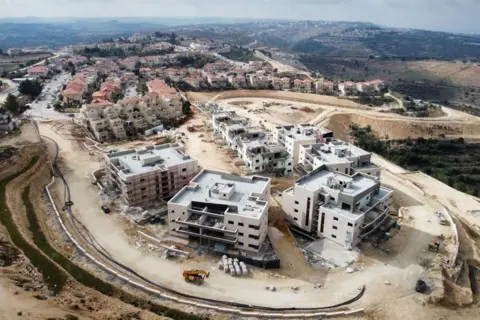
EPAOn a clear day, the skyscrapers of Tel Aviv are visible from the hill above Karnei Shomron, an Israeli settlement in the occupied West Bank.
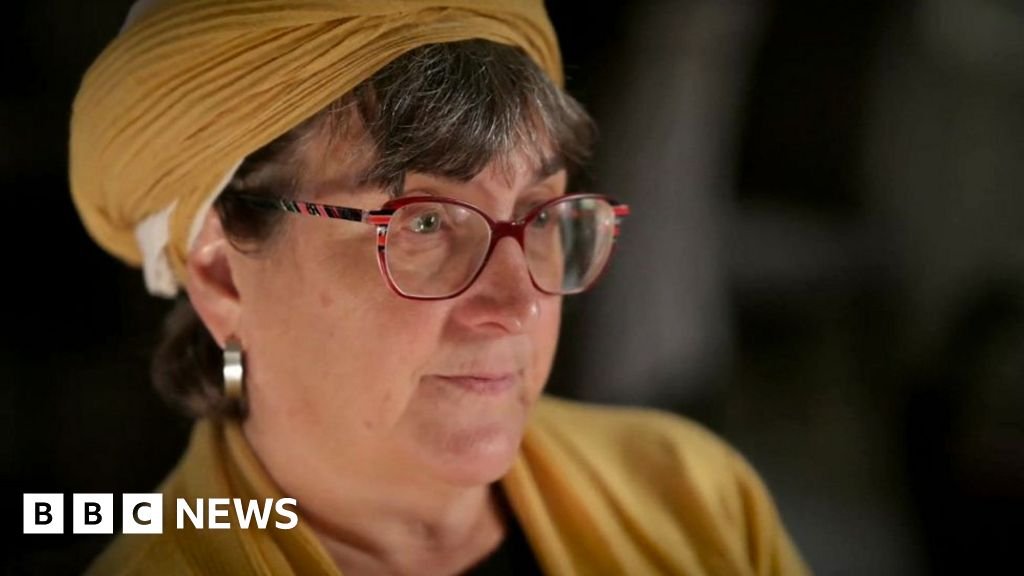
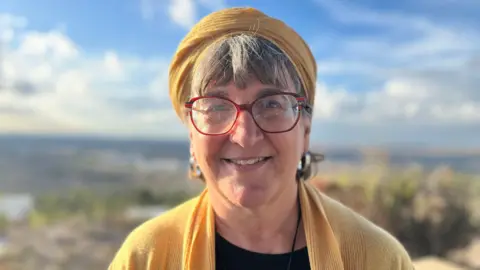
“It feels different from Tel Aviv,” said Sondra Baras, who has lived in Karnei Shomron for almost 40 years. “I live in a place where my ancestors lived thousands of years ago. I do not live in occupied territory; I live in biblical Judea and Samaria.”
For many settlers here, the border between the state of Israel and the territory captured by Jordan in the 1967 Middle East war has been erased from their narrative.
The audio guide for visitors to the hilltop viewpoint describes the West Bank as “the region of Israel” and the Palestinian city of Nablus as the place where God promised the land to the Jews.
But formal annexation of that territory has so far remained a pipe dream for settlers like Sondra, even as settlements – seen as illegal by the UN’s top court and most other countries – have mushroomed year after year.
Now, many see an opportunity to go further with the election of Donald Trump as the next president of the United States.
“I was thrilled that Trump won,” Sondra told me. “I want very much to extend sovereignty in Judea and Samaria. And I think that’s something that Trump can support.”
There are signs that some in his new administration may agree with her.
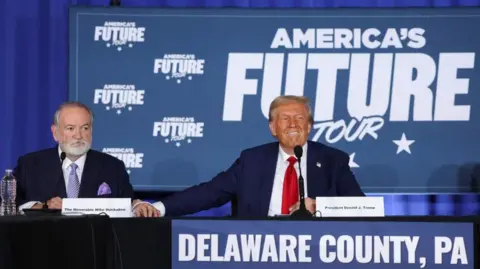
Mike Huckabee, Trump’s nominee to be the new ambassador to Israel, signaled his support for Israeli claims to the West Bank in an interview last year.
“When people use the term ‘occupied,’ I say, ‘Yes, Israel is occupying the land, but it is an occupation of land that God gave them 3,500 years ago. This is their land,” he said.
 Reuters
Israel Gantz, head of the regional settlement council that runs Karnei Shomron, says he has already seen a change in tone from the incoming Trump administration in the wake of the October 7, 2023, attacks by Hamas on Israel that sparked the Gaza war.
“Both here in Israel and in the US, they understand that we have to exercise sovereignty here,” he told me. “It’s a process. I can’t tell you it will be tomorrow. But in my eyes the dream of a two-state solution is dead.”
US President Joe Biden has always maintained the US position in support of a future Palestinian state alongside Israel. Asked if he was hearing anything different from the incoming Trump administration, Mr Gantz said: “Of course, yes.”
But there are also signs that Israelis lobbying to annex the West Bank – some of them in cabinet positions – may be disappointed by Trump’s decisions.
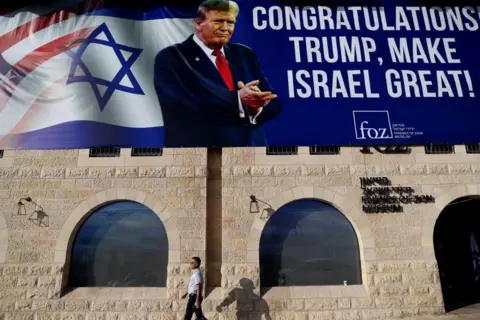
Their hopes are fueled by memories of his first term as president, during which he broke with decades of US policy – and international consensus – by recognizing Jerusalem as Israel’s capital and Israeli sovereignty over the occupied Golan Heights, which were seized from Syria in 1967
 EPA
EPABut supporting the annexation of the West Bank would be a much bigger and thornier issue for Trump.
That would likely alienate Washington’s other key ally, Saudi Arabia, complicating Trump’s chances for a broader regional deal.
It could also alienate some moderate Republicans in the US Congress, concerned about the impact on West Bank Palestinians and their future status under Israeli rule.
Settler leader Sondra Barras told me that West Bank Palestinians who don’t want to live in Israel can “go wherever they want.”
Challenged why they should leave their homeland, she said: “I’m not kicking them out, but things are changing. How many wars have they started? And they’ve lost.”
“If sovereignty were to go forward, there would be a lot of shouting and screaming, absolutely,” she continued. “But at some point you create a fact that is irreversible.”
Shortly after Trump’s election victory last November, Israel’s far-right Finance Minister Bezalel Smotrich publicly called for the annexation of Israeli settlements in the West Bank.
“2025 should be the year of sovereignty in Judea and Samaria,” he said.
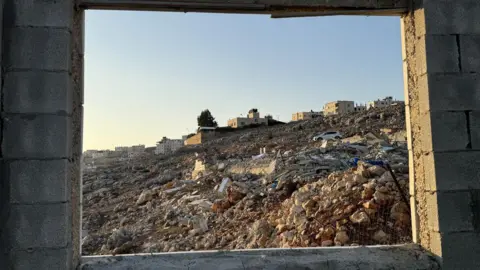
Whether the new US president agrees or not, many Palestinians say that talk of formal annexation misses the point — that Israel has effectively already annexed territory here.
One of them is Mohaib Salameh. He leads me through the ruins of his family home, built on private Palestinian land, on the outskirts of Nablus. The building was declared illegal by an Israeli court last year and demolished.
Israel has full security and planning control in 60 percent of the West Bank on a temporary basis, as outlined in the Oslo peace accords three decades ago.
As settlements expand, permits for Palestinian homes are almost never granted. And lawyers say that such demolitions are increasing.
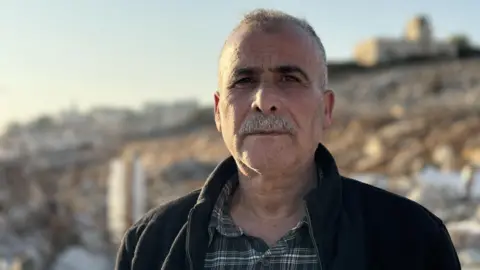
“It’s all part of the politics that forces us to leave,” Mohaib said. “This is a policy of forced migration. What does it matter to them (the Israelis) if I build here or not? We are not a threat to them.”
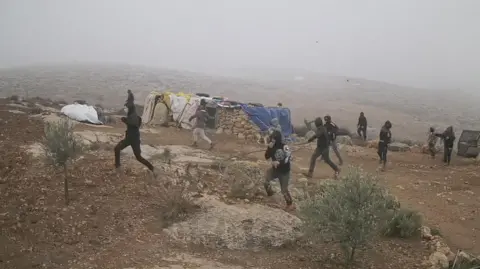
Palestinians are also increasingly being forced off their land by violent Israeli settlers – who have been sanctioned by the US and UK but largely left unchallenged by Israeli courts at home.
 B’Tselem
Activists say more than 20 Palestinian communities in the West Bank have been driven out in the past few years by increasingly violent attacks, and that settlers are now entering new areas outside Israel’s temporary civilian control.
Mohaib told me that no US president has ever defended the Palestinians and that he doesn’t believe Donald Trump will either.
America’s next president is widely seen as a friend of Israel.
But he’s also a man who likes to make deals — and avoid conflict.



