Physical Address
304 North Cardinal St.
Dorchester Center, MA 02124
Physical Address
304 North Cardinal St.
Dorchester Center, MA 02124

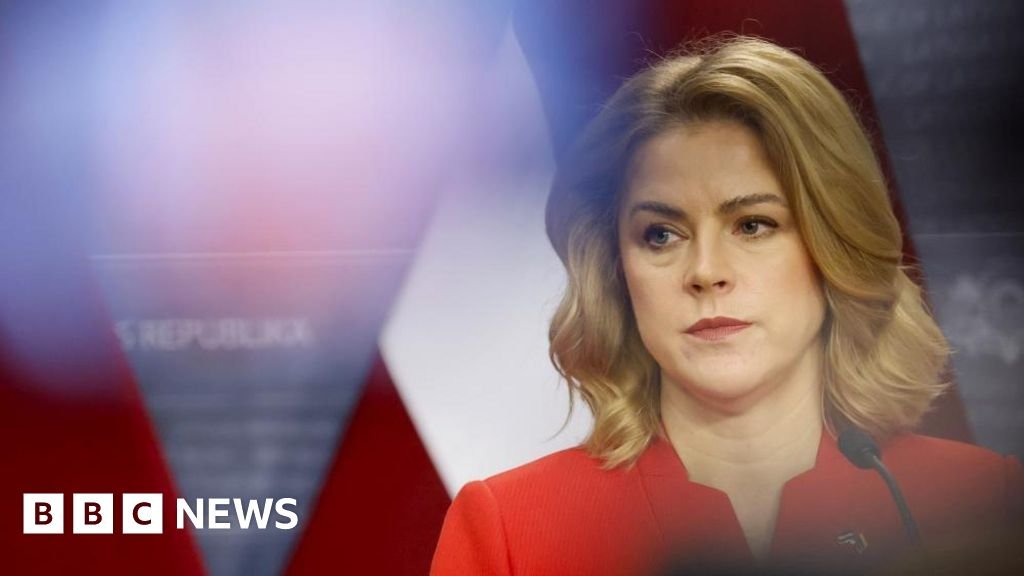
Latvian lawmakers voted to withdraw from an international agreement aimed at protecting women from violence, including domestic violence, after a long and tense debate in parliament.
Several thousand people protested this week’s vote in Riga. It is now up to President Edgars Rinkevics to decide whether to approve the law or not.
Known as the Istanbul Conventionthe 2011 treaty came into force in Latvia only last year, requiring governments to develop laws and support services to end all violence.
Latvia is the first EU country to withdraw from the treaty. Turkey withdrew in 2021, a step described as a huge setback by the Council of Europe’s top human rights body.
The treaty was ratified by the EU in 2023, but ultra-conservative groups say the deal’s focus on gender equality undermines family values and promotes “gender ideology”.
After a 13-hour debate in the Saeima, Latvian lawmakers voted 56 to 32 to withdraw from the treaty, in a move sponsored by opposition parties but backed by politicians from one of the three coalition parties, the Union of Greens and Farmers.
The result is a setback for centre-right Prime Minister Evika Silina, who joined protesters outside parliament earlier this week. “We will not surrender, we will fight so that violence does not win,” she told them.
One of the main political groups behind the withdrawal is Latvia First, whose leader Ainars Slesers called on Latvians to choose between a “natural family” and a “multi-sex gender ideology”.
Latvia’s ombudsman Karina Palkova called for the treaty not to be politicized, and the group Equality Now said it was “not a threat to Latvian values, but a tool for their realization”.
Thursday’s vote sparked protests both in Latvia and beyond.
Twenty-two thousand people have signed a Latvian petition not to cancel the treaty. Women’s rights group Centrs Marta has called a protest next Thursday, accusing lawmakers of not listening to the Latvian people.
The head of the Parliamentary Assembly of the Council of Europe, Theodoros Roussopoulos, said that Latvia took a hasty decision fueled by misinformation. According to him, this is “an unprecedented and deeply worrying step backwards for women’s rights and human rights in Europe”.
Since Turkey abandoned the treaty four years ago, femicide and violence against women have risen sharply, he added.
Since the vote did not win a two-thirds majority, it means the president can return the bill for a new reading if there are objections.
President Rinkevichs told X that he would evaluate the decision under the constitution “taking into account state and legal considerations, not ideological or political considerations.”
Last week, another member of the ruling coalition, the Progressives, said it would not rule out an appeal to the Constitutional Court.
According to the European Institute for Gender Equality (EIGE), an EU agency, women are more likely to be victims of intimate partner violence than men.
In its latest dataEIGE said that in 2022, 142 cases of intimate partner violence against women were reported in Latvia. This is above the 109 crimes recorded in 2021, but below the total in the previous three years and during the Covid pandemic.


