Physical Address
304 North Cardinal St.
Dorchester Center, MA 02124
Physical Address
304 North Cardinal St.
Dorchester Center, MA 02124

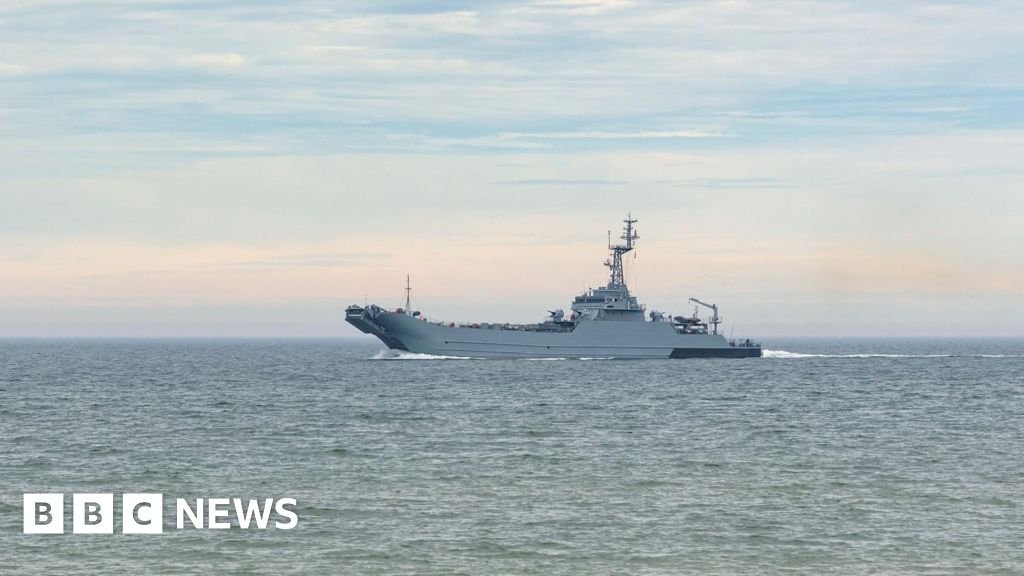
NATO has launched a new mission to step up surveillance of ships in the Baltic Sea after critical undersea cables were damaged or severed last year.
NATO chief Mark Rutte said the mission, dubbed “Baltic Sentry,” would involve more patrol planes, warships and drones.
His statement was made at a summit in Helsinki attended by all NATO countries located on the Baltic Sea – Finland, Estonia, Denmark, Germany, Latvia, Lithuania, Poland and Sweden.
Although Russia was not directly blamed for the cable failure, Rutte said NATO would increase its surveillance of Moscow’s “shadow fleet” – ships without clear ownership that are used to carry embargoed oil products.
Tensions between NATO countries and Russia have been rising relentlessly since Russia’s full-scale invasion of Ukraine in February 2022.
“There is cause for serious concern” about damage to infrastructure, Rutte said. He added that NATO would respond to such accidents decisively, with more boarding of suspicious vessels and, if necessary, confiscating them.
He declined to share more details about the number of assets that will be involved in the Baltic Sentry initiative, saying that this could change regularly and that he did not want to make “the enemy any wiser than he already is”.
Underwater infrastructure is essential not only for the supply of electricity, but also because more than 95% of Internet traffic is provided via underwater cables, Rutte said, adding that “1.3 million kilometers (800,000 miles) of cables ensure approximately 10 trillion dollars in financial transactions every day’.
In an X post, he said NATO would do “whatever it takes to ensure the safety and security of our critical infrastructure and everything we hold dear.”
Recent months have seen an increase in unexplained damage to underwater infrastructure in the Baltic Sea.
The latest incident with the underwater infrastructure saw an electric cable running between Finland and Estonia to be cut at the end of December.
Finnish coast guard crew boarded the Eagle S oil tanker – which was flying the Cook Islands flag – and steered it into Finnish waters, while Estonia deployed a patrol vessel to protect its undersea power cable.
Risto Lohi of Finland’s National Bureau of Investigation told Reuters on Monday that the Eagle S was threatening to cut a second power cable and gas pipeline between Finland and Estonia at the time it was seized.
Estonian Foreign Minister Margus Tsahkna said in December that damage to underwater infrastructure had become “so frequent” that they questioned the idea of the failure being considered “accidental” or “just bad seamanship”.
Tsakhna did not directly accuse Russia. Nor did Swedish Prime Minister Ulf Kristerson, who said on Sunday that while Sweden was not jumping to conclusions or “accusing someone of sabotage without very good reasons”, it was also “not naive”.
“The security situation and the fact that strange things are happening again and again in the Baltic Sea also lead us to believe that hostile intentions cannot be ruled out.
“There is little evidence that a ship would accidentally and unknowingly … not realize it could cause damage,” he said.


