Physical Address
304 North Cardinal St.
Dorchester Center, MA 02124
Physical Address
304 North Cardinal St.
Dorchester Center, MA 02124

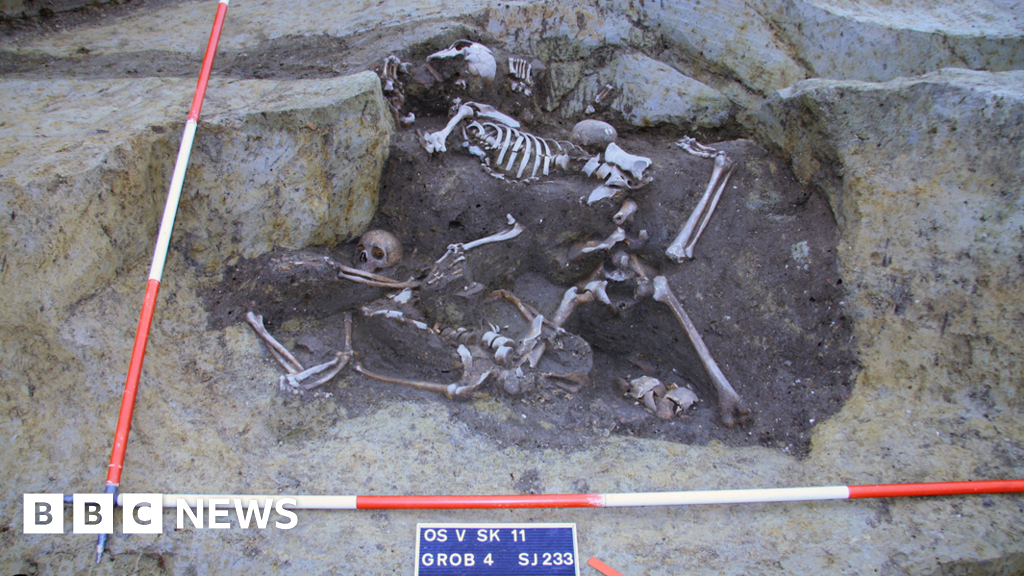
Scientists say seven skeletons found in a mass grave in Croatia are most likely Roman soldiers who lived 1,700 years ago.
The male skeletons, all with various injuries, were found “completely preserved” during excavations in 2011 at the site of the Roman city of Mursa – modern Osijek – in far eastern Croatia, a new research paper says.
Mursa was conquered by the Romans in the first century BC and became a large settlement that was also an important center for trade and crafts.
Now researchers from several European archaeological institutions have been able to determine not only when the men lived, but also how they may have died.
According to the paperthe men in the grave were between the ages of 36-50, taller than average height, and were “healthy” individuals. Their diets were mostly vegetarian, but some had indulged in some meat and seafood.
All showed a variety of healed and unhealed injuries, including those caused by blunt force trauma, and there were puncture wounds on two of their torsos that scientists believe were likely caused by arrows or spearheads.
All the men suffered from some “pulmonary (affecting the lungs) disease in the last days of their lives”.
DNA analysis also revealed that the men were of mixed ancestry and that none appeared to be from the local area.
The paper notes that the Roman Empire was an era of particular violence and that Mursa was involved in several conflicts.
Researchers believe the men were likely victims of “Crisis of the Third Century”most likely the Battle of Mursa of AD 260, when there were “numerous battles fought between various pretenders to the throne”.
The document states that the pit in which the skeletons were found was originally a well – several of which have been found in the area.
It notes that mass burials and mass graves “were not a common way of burying the dead in the Roman Empire” and were used mostly in extreme situations and cases of mass casualties.
Given the various angles at which the skeletons now lie, researchers say they were “most likely thrown” into the well before being covered with earth.
Mursa has been of archaeological importance for years, with various ancient civilizations discovered in the area.


