Physical Address
304 North Cardinal St.
Dorchester Center, MA 02124
Physical Address
304 North Cardinal St.
Dorchester Center, MA 02124

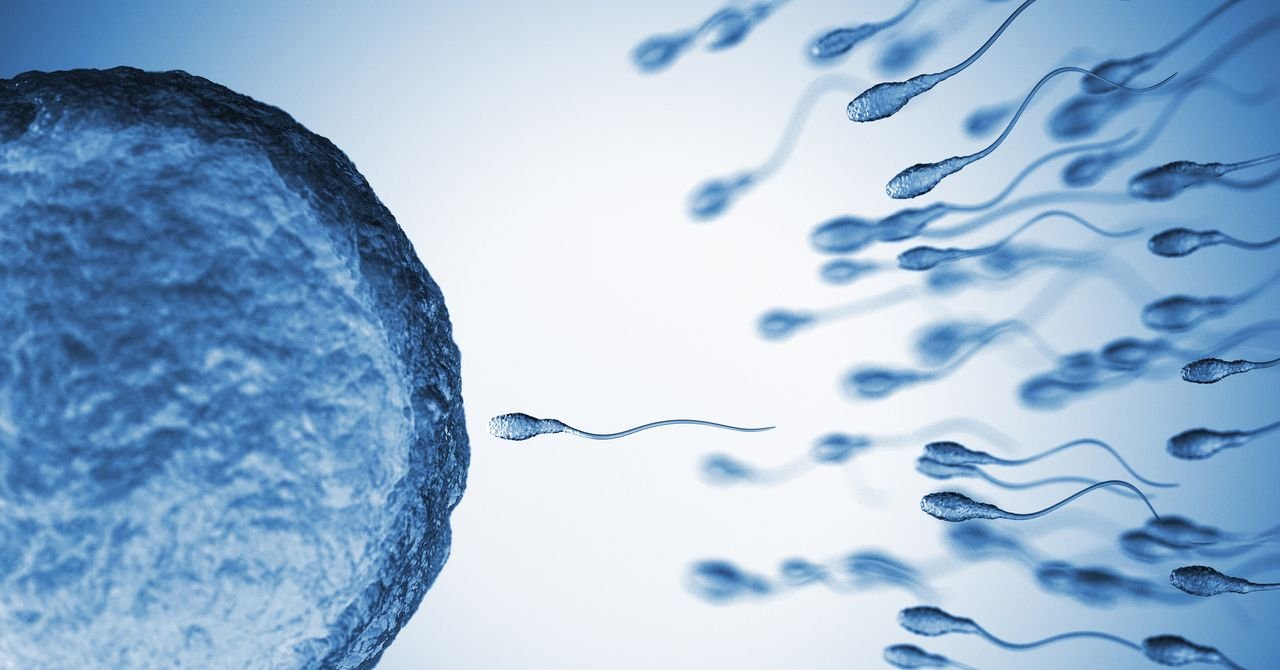
Not human semen Genetic mutations only accumulate with age; as a percentage sperm By carrying potentially serious mutations, there is also an increased risk of the disease in offspring.
This information has emerged in a new study by researchers from the Sanger Institute and King’s College London. The team used extremely high-precision technology to sequence sperm samples from men aged 24 to 75 and found that the male germ line (the line of cells that produces sperm) is subject to a combination of mutations and positive selection.
The scientists used a duplex sequencing technique called NanoSeq, which can detect rare mutations with a very small margin of error. This allowed them to analyze 81 sperm samples from 57 donors. The results show that a man’s sperm adds an average of 1.67 new mutations per year.
But the most interesting aspect of the study is not limited to the mere accumulation of mutations with age. The authors discovered that the male germ line is subject to positive selection. That is, certain mutations give an advantage to cells that produce and proliferate sperm. They identified that many of these mutations are in genes associated with developmental disorders or childhood cancer susceptibility.
“We hope to find evidence that selection affects sperm mutations,” said Matthew Neville, co-author of the published study. this month In the journal Nature. “What surprised us was the increase in the number of sperm carrying mutations associated with severe disease.”
Researchers estimate that about 3 to 5 percent of middle-aged and older men carry some potentially pathogenic mutation in the sperm exome (the coding part of the genome). This represents a higher risk than previously estimated. In more precise numbers, the estimated fraction for men in their thirties was closer to 2 percent, while it reached about 4.5 percent for men in their seventies.
From an evolutionary and clinical perspective, the implications are significant. Evolutionarily, it shows that the male germ line is not just a “machine” that accumulates defects: there is a dynamic process of mutation and selection that can change the genetic “quality” of sperm with the age of the father.
From a clinical perspective, however, this raises questions about reproductive planning, genetic counseling, and the additional risks associated with an older father. The authors argue that although the percentages are modest, the accumulation is not only linear but also has a selection component that favors mutations with potential to spread.


