Physical Address
304 North Cardinal St.
Dorchester Center, MA 02124
Physical Address
304 North Cardinal St.
Dorchester Center, MA 02124

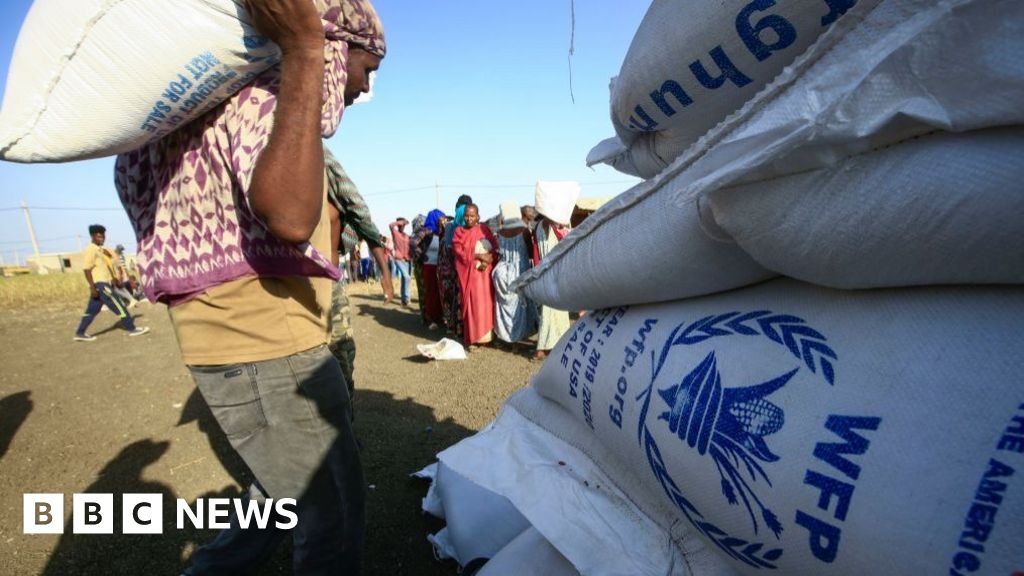
Sudan’s military government has ordered two senior officials from the United Nations World Food Program (WFP) to leave the country amid widespread famine caused by a grueling civil war that broke out in April 2023.
The WFP said the directors of its operation in Sudan were declared “personae non grata” and told to leave within 72 hours, without explanation.
The decision comes days after the paramilitary Rapid Support Force (RSF) captured the key Darfur town of al-Fasher from the military after an 18-month siege that included a food blockade.
The WFP said the expulsion was a “pivotal moment” as humanitarian needs in Sudan “have never been greater with more than 24 million people facing acute food insecurity”.
Although the military government has not given a reason for the expulsion, it has previously accused aid groups of breaking local laws and publishing misleading reports about famine conditions.
The government said the expulsion would not affect the country’s cooperation with the WFP, state news agency Suna reported.
WFP says it is engaging with the Sudanese authorities to resolve the matter.
Two and a half years of fighting between the army and the RSF escalated on Sunday when the RSF captured El-Fasher in Darfur’s western region.
There are now fears for the fate of some 250,000 people in the city, many of whom are from non-Arab communities. Reports of atrocities, including mass killings, have increased since the city fell.
“The situation in al-Fasher is extremely difficult and there are violations on the roads, including robberies and shootings, without distinguishing between young and old,” one man who managed to escape from al-Fasher told BBC Arabic’s Sudan Lifeline programme.
“We managed to reach Tawila, where humanitarian organizations are present. We are grateful to have arrived, even though we slept on the roads.”
Tawila is a town about 60 km (37 miles) west of el-Fasher and already hosts about 800,000 people – many of whom fled the huge Zamzam camp near el-Fasher when it was attacked by the RSF in April.
Since the conflict broke out, RSF fighters and allied Arab militias in Darfur have been accused of attacking people from non-Arab ethnic groups – allegations RSF denies.
On Tuesday, the El-Fasher Resistance Committee, a group of local activists, accused the RSF of executing wounded people being treated at the city’s Saudi hospital.
Researchers at Yale University backed up that claim, saying satellite images appeared to show “clusters” of bodies on the hospital grounds.
International organizations such as the European Union and the African Union have expressed alarm, while locals say the current situation is a reminder of the region’s darkest days.
Darfur experienced one of the world’s worst humanitarian catastrophes from 2003 to 2020.
The Janjaweed, a militia that was accused of genocide and ethnic cleansing during this time, became what is now the RSF.
Sudanese-American poet Emtital Mahmoud, who has family in El-Fasher and lost relatives in the previous Darfur conflict, said he believed “genocide” was happening again, as seen in social media footage released by RSF.
“The only difference … is that now it’s live and videotaped and sent around because RSF understand they can act with impunity,” Ms Mahmoud told the BBC.
RSF denies targeting civilians.


