Physical Address
304 North Cardinal St.
Dorchester Center, MA 02124
Physical Address
304 North Cardinal St.
Dorchester Center, MA 02124

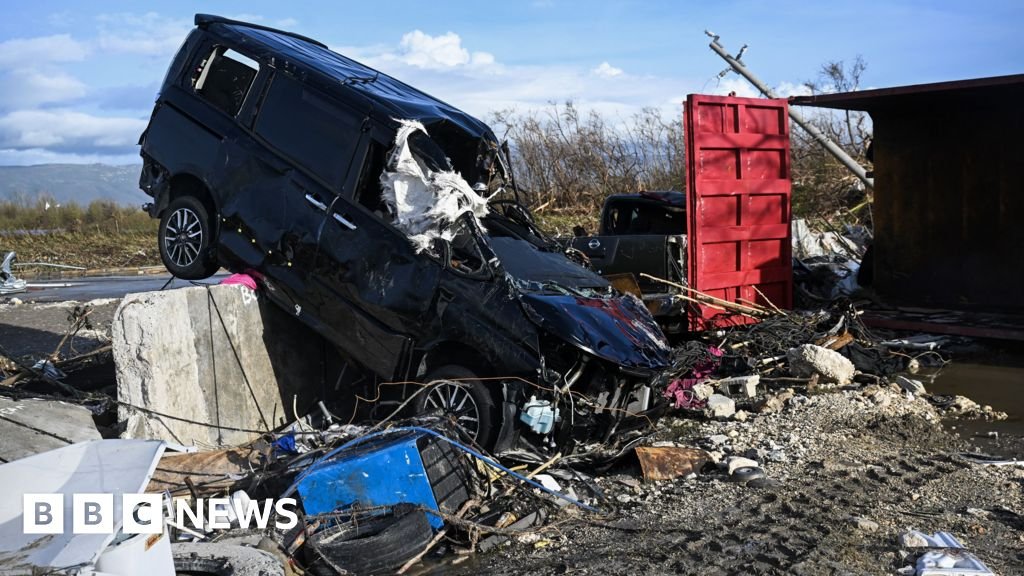
The number of dead in Jamaica as a result of hurricane Melissa has reached 28 people, the prime minister of the Caribbean country announced.
Andrew Holness confirmed nine other deaths on Saturday, adding that there were reports of possible deaths still being verified – suggesting the figure could still rise.
Emergency responders and aid agencies have struggled to reach certain parts of the island since the storm due to blocked roads, debris and flooding.
The category five hurricane – the strongest type – caused dozens of deaths in the Caribbean, brought powerful winds and mudslides to Cuba and Haiti.
The full extent of the devastation Melissa caused in Jamaica only became clear in the past few days, after the hurricane knocked out communications systems and power to much of the island after making landfall on Tuesday.
Communities in the western part of the island, such as Black River and Montego Bay, have seen the worst of the destruction.
Images emerged showing buildings leveled to the ground, debris and belongings strewn across streets and entire neighborhoods still under floodwaters.
The Red Cross says 72 percent of people in Jamaica are still without electricity and about 6,000 are in emergency shelters.
Jamaican officials confirmed to the AFP news agency that multiple field hospitals were being set up to treat people in the worst-affected areas in the west.
Aid reaching those in need was initially hampered by the temporary closure of Jamaica’s airports.
Now that it’s coming into the country, landslides, downed power lines and fallen trees have made certain roads impassable, complicating its spread.
With so many in need of clean drinking water, food and medicine, there have been reports of desperate people entering supermarkets and pharmacies to collect what they can.
Melissa became the most powerful storm on record to hit Jamaica and one of the strongest seen in the Caribbean.
At its peak, the hurricane had sustained winds of 185 mph (295 km/h). A category five hurricane — those capable of causing catastrophic damage — has winds in excess of 157 miles per hour.
At least 31 people were killed in Haiti as a result of Melissa, while at least two deaths were reported in the Dominican Republic.
In Cuba, thousands of people were evacuated as more than 60,000 homes were damaged or destroyed.
The impact of climate change on storm frequency is still unclear, but increased sea surface temperatures warm the air above it and make more energy available to power hurricanes, cyclones and typhoons. As a result, they are likely to be more intense with more extreme rainfall.
Ahead of this year’s Atlantic hurricane season, the US National Oceanic and Atmospheric Administration is predicting above-normal activity.


