Physical Address
304 North Cardinal St.
Dorchester Center, MA 02124
Physical Address
304 North Cardinal St.
Dorchester Center, MA 02124

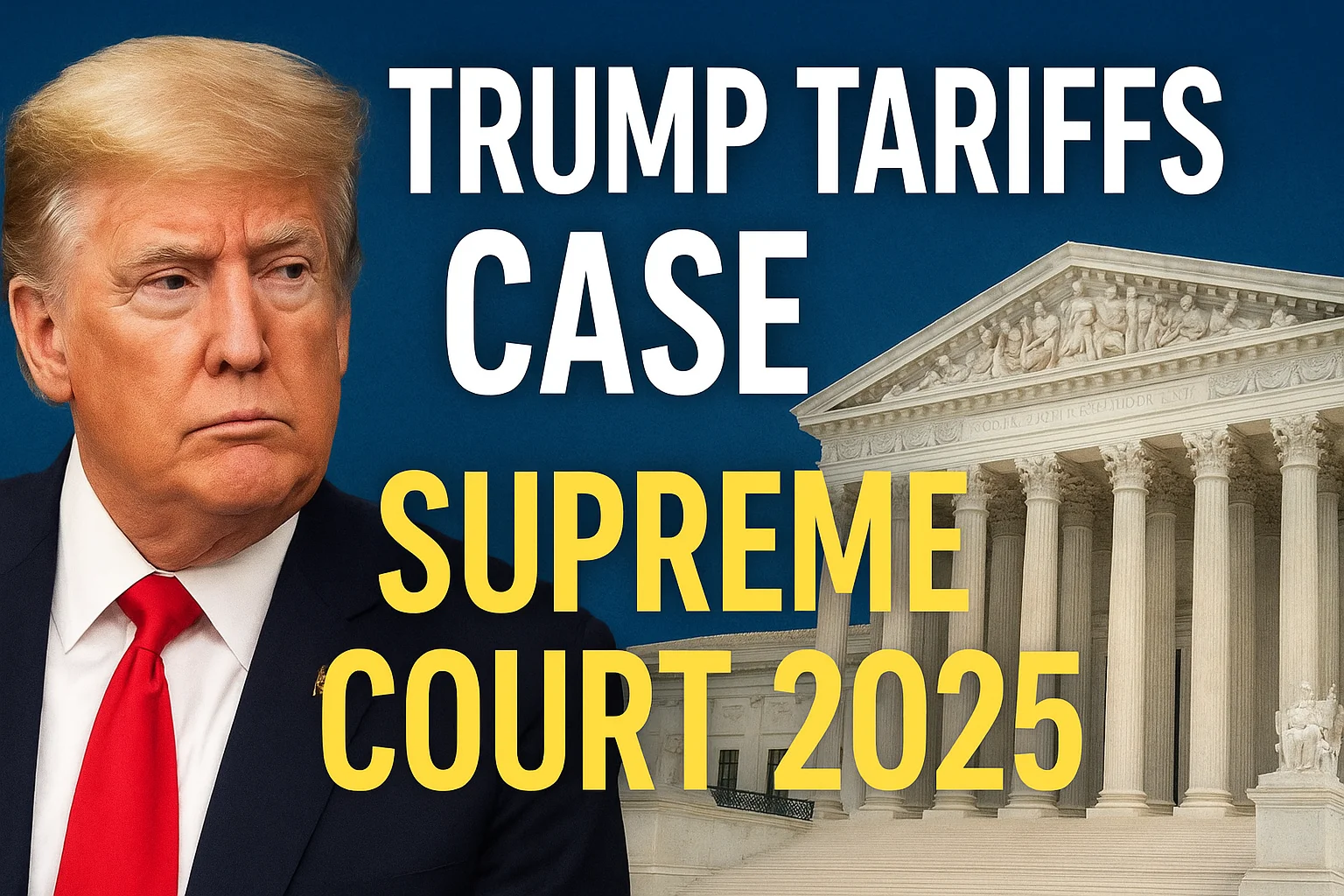
On November 5, 2025, the U.S. Supreme Court heard one of the most consequential legal and political cases in recent years — the case over the tariffs imposed by former President Donald Trump during his previous term in office.
This case goes far beyond economic concerns. It strikes at the very heart of the U.S. constitutional system, testing how far a president can use emergency powers to make major economic decisions without congressional approval.
The dispute began when Trump imposed tariffs on imports from countries such as China, Canada, and Mexico, arguing that the move was necessary to protect the U.S. economy from unfair trade practices.
Many businesses and economic institutions, however, saw the decision as an overreach of executive power, claiming that the Constitution grants Congress — not the president — the authority to levy taxes and duties.
This disagreement has now reached the Supreme Court, which will determine whether Trump exceeded his constitutional authority.
This law allows the president to respond to “unusual and extraordinary foreign threats” that affect national security or the economy.
Opponents argue that Trump’s use of this act to impose broad tariffs represents an excessive expansion of executive authority, while supporters insist that the global economic conditions justified invoking it.
This principle limits executive power in matters of major economic or political importance.
It holds that Congress must give explicit authorization for significant decisions such as nationwide trade tariffs — not leave them to executive interpretation.
Under this doctrine, Congress cannot delegate its core legislative powers — like taxing or tariff-setting — without clear and defined limits.
Using emergency powers for long-term economic policymaking, critics argue, violates this constitutional separation of powers.
If the Court rules that Trump overstepped his authority, it could invalidate or narrow the scope of the imposed tariffs — restoring a stronger balance of power between Congress and the White House.
If the Court upholds Trump’s actions, it would effectively grant future presidents the ability to use emergency laws for sweeping economic measures without direct congressional approval.
The Court might take a middle path — establishing new limits or procedural safeguards on how emergency powers can be used in economic contexts without removing them entirely.
The Court’s decision will have consequences far beyond the United States.
It could redefine the relationship between the executive and legislative branches and reshape America’s role in the global trade system.
Major economies such as China and the European Union are watching closely, as the ruling could influence future trade negotiations and tariff policies worldwide.
Will prices drop if the tariffs are struck down?
Possibly, but not immediately — it depends on how global supply chains and trade relationships adjust.
Can Congress reimpose similar tariffs?
Yes, but only through explicit legislation defining the scope and duration of such measures.
The Trump tariff case before the Supreme Court represents a critical test of the American constitutional balance.
It is more than an economic dispute — it’s a battle over the separation of powers and the limits of presidential authority.
The Court’s decision will not only determine the fate of Trump’s trade policies but also shape the balance of power between the presidency and Congress for decades to come, leaving a lasting impact on both the U.S. and global economies.


