Physical Address
304 North Cardinal St.
Dorchester Center, MA 02124
Physical Address
304 North Cardinal St.
Dorchester Center, MA 02124

Gustavo Ocando AlexReporting from Maracaibo, Venezuela for BBC News Mundo
 Gustavo Ocando Alex
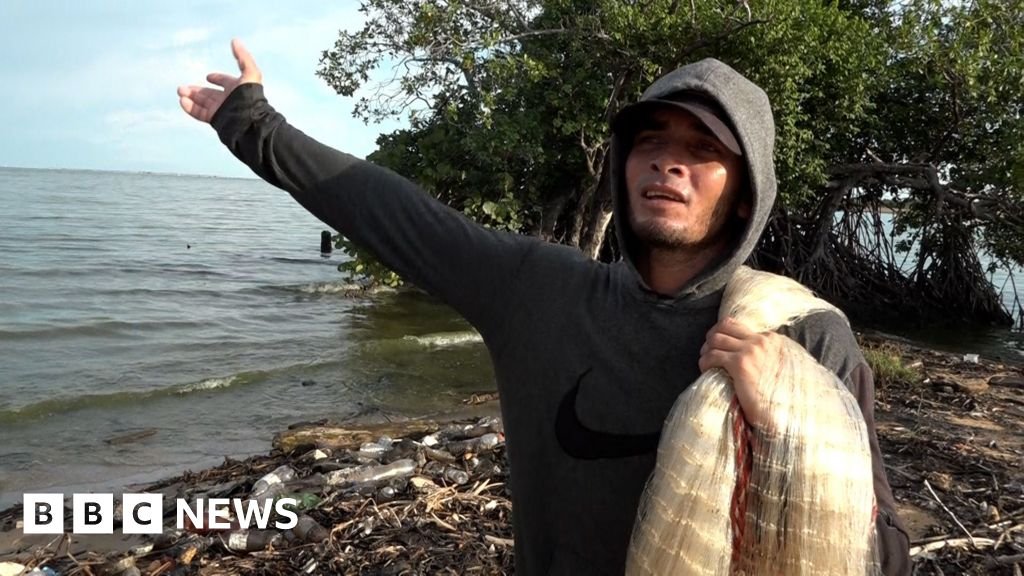
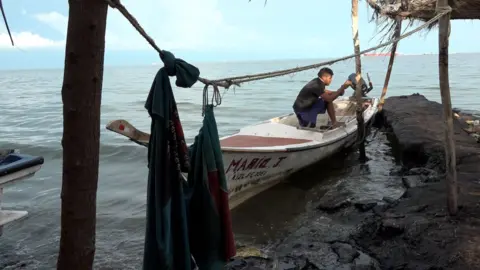
Wilder Fernandez caught four big fish in the murky waters of a small bay north of Lake Maracaibo.
The contents of his net will serve as dinner for his little crew before they go fishing again in the evening.
But this daily task is a job he has been dreading doing lately.
After 13 years as a fisherman, Mr Fernandez admits he now fears his job could turn deadly.
He fears that he may die in these waters not at the hands of a night raider – a threat that fishermen like him have faced in the past – but rather killed in a strike by a foreign force.
“It’s crazy, man,” he said of the deployment of US warships, fighter jets, a submarine and thousands of US troops in the waters north of Venezuela’s coast.
US forces patrolling the Caribbean are part of a military operation targeting suspected “narco-terrorists” who the White House says have ties to the Venezuelan government led by Nicolas Maduro.
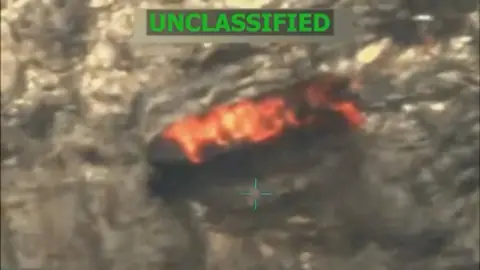
Since September 2, the US has carried out a series of strikes against what it has called “drug boats” that have killed at least 27 people.
The US has accused those killed of drug smuggling, but has so far provided no evidence. Experts suggest the strikes may be illegal under international law.
Tensions between the US and Venezuela escalated further on Wednesday when US President Donald Trump said he was considering strikes on Venezuelan soil.
He also confirmed that he had authorized the CIA to conduct covert operations in Venezuela.
 Gustavo Ocando Alex
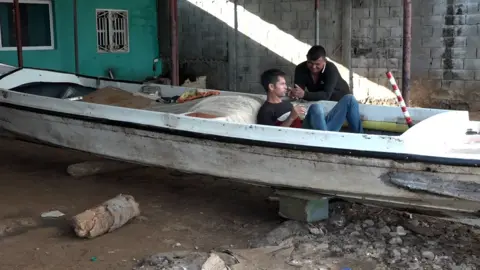
Mr Fernandez has been in the news lately.
Although the US says the strikes took place thousands of kilometers from where he was fishing, his wife is trying to convince him to leave Lake Maracaibo.
Every day she asks him to quit his fishing job. “He tells me to look for another job, but there is nowhere,” he explains.
He did not rule out that his boat was hit “by mistake”.
“Of course it worries me, you never know. I think about it every day, man,” says the father of three.
A day after BBC Mundo spoke to Mr Fernandez, Trump announced that “six narco-terrorists” had been killed in the latest US strike in international waters off the coast of Venezuela.
Trump added that “intelligence has confirmed that the ship trafficked drugs and was connected to illegal narco-terrorist networks.”
 Reuters
The Trump administration accuses Maduro of running the Cartel of the Suns drug-trafficking gang and is offering a $50m (£37m) reward for information leading to his capture.
Maduro, whose legitimacy as Venezuela’s president has been internationally contested after disputed elections last year, has rejected the cartel’s accusations. He dismissed them as an attempt by the White House to remove him from office.
In his latest statement, he called on television for peace with the United States.
Meanwhile, Venezuela’s defense minister, General Vladimir Padrino, warned Venezuelans to prepare “for the worst.”
Speaking after the October 2 incursion of five F-35 fighter jets into Venezuelan airspace, General Padrino said his nation faced a “serious threat,” which he warned could include “air bombardments, naval blockades, undercover commandos landing on Venezuelan beaches or in the Venezuelan jungle, swarms of drones, sabotage and targeted assassinations of leaders”.
Venezuela also condemned “growing threats” from the US at the UN Security Council last week.
In response, the US representative at the UN meeting, John Kelly, emphasized that his country “will not hesitate in our actions to protect our nation from narco-terrorists”.
 Gustavo Ocando Alex
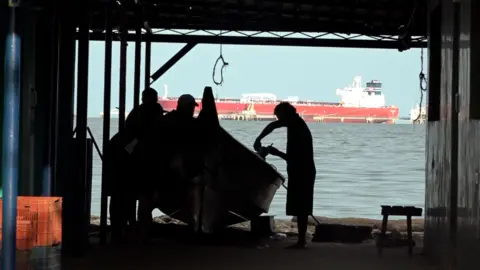
Meanwhile, the attacks in the Caribbean have undermined the security of fishermen in Venezuela, complained Jennifer Nava, spokeswoman for the Council of Fishermen in El Bajo, in Venezuela’s Zulia state.
Ms Nava tells BBC Mundo that people employed in the fishing industry fear being caught in the crossfire between US forces and suspected drug traffickers.
 AFP via Getty Images
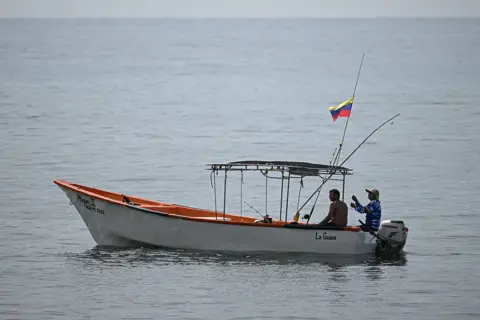
Ms Nava argued that the added risks fishermen face could lead some of them to fall into the arms of drug and arms smugglers who want to hire people to transport their illegal shipments.
“Some of these people connect with traffickers,” she explains, adding that the decline in the fishing industry may make fishermen more vulnerable to these approaches.
There is certainly a sense of nervousness among the fishermen of Lake Maracaibo.
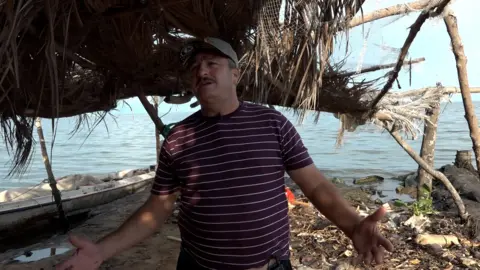
Most of the crew of two small fishing boats owned by Usbaldo Albornoz refused to work when news of the US strikes broke.
Mr Albornoz, who has been in the fishing business for 32 years, described the situation as “alarming”.
“The boys didn’t want to go out to sea to fish,” he told BBC Mundo on the beach in San Francisco de Zulia, which is on the northern shore of Lake Maracaibo where it meets the Gulf of Venezuela.
 Gustavo Ocando Alex
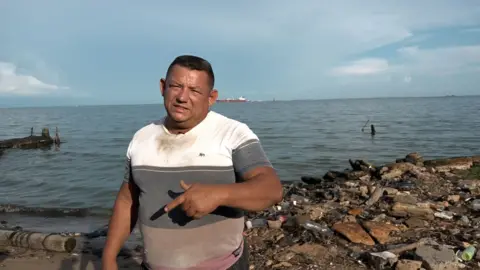
The fear of being hit by a US strike is the latest in a long list of risks he and his men face, including pirates, oil spills and falling profits in recent years, Mr Albornoz explains.
In a leaked memo recently sent to US lawmakers, the Trump administration said it had determined it had engaged in a “non-international armed conflict” with drug-trafficking organizations.
The White House described the attacks on the boats in the Caribbean as “self-defense” in response to criticism from legal experts who said they were illegal.
 Gustavo Ocando Alex
But in addition to the fear that many feel, there is also a sense of defiance.
In late September, hundreds of fishermen on dozens of boats headed to Lake Maracaibo in a show of support for Maduro’s government and to protest the deployment of the US military.
Jose Luzardo was one of them. A spokesman for El Bajo fishermen, he has been fishing for almost 40 years and accuses the US of “pointing their guns at our Venezuela”.
He says he is not afraid and would give his life to protect his homeland.
 Gustavo Ocando Alex
“The Trump administration has backed us into a corner. If we’re going to give our lives to protect the government, then we’re going to do it to end this bullshit,” he says.
He insists that what the fishermen want is “peace and jobs” and not war, but becomes visibly angry when he talks about the “military barrier” he says the US has placed in the Caribbean.
Last month, the Venezuelan government mobilized members of the militia and called on those who had not signed up for the civilian forces to do so.
More than 16,000 fishermen followed his call, according to Fisheries Minister Juan Carlos Loyo.
Luzardo, who has been fishing since he was 11, says he “will be ready to fight wherever it takes.”
“If they (US) want to kill us, so be it, but we are not afraid.