Physical Address
304 North Cardinal St.
Dorchester Center, MA 02124
Physical Address
304 North Cardinal St.
Dorchester Center, MA 02124

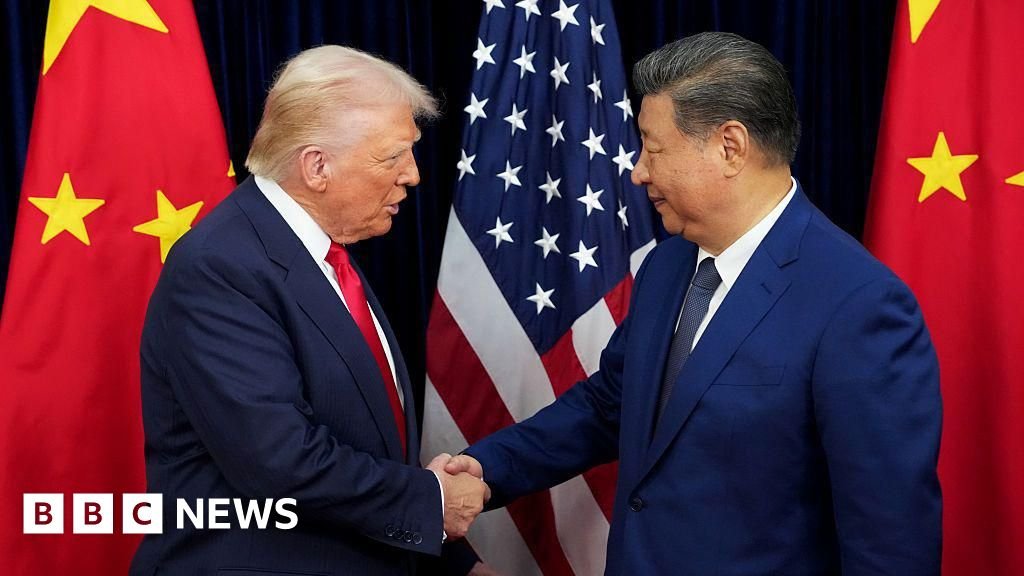
China will begin easing a ban on exports of automotive computer chips vital to the world’s auto industry as part of a trade deal struck between the United States and China, the White House said.
The White House confirmed details of the deal in a new fact sheet after Xi Jinping and Donald Trump met in South Korea this week.
The countries also reached agreements on US soybean exports, the supply of rare earth minerals and materials used to make the drug fentanyl.
The agreement de-escalates the trade war between the world’s two largest economies after Trump hit China with tariffs after taking office this year, leading to rounds of retaliatory tariffs and global business uncertainty.
Much of Saturday’s information was announced by Trump and other officials after the meeting between the two leaders.
Trump described the talks held in South Korea as “incredible”, while Beijing said they had reached a consensus to resolve “major trade issues” – but did not immediately release details of the deal.
Speaking on Sunday after the fact sheet was released, Treasury Secretary Scott Bessent told CNN: “We don’t want to separate from China … (But) they’ve shown themselves to be an unreliable partner.”
One of the issues involved in the deal was the export of automotive computer chips. There were concerns that the lack of chips from Nexperia, which has manufacturing facilities in China, could create problems with the global supply chain.
Nexperia is a Chinese company but based in the Netherlands. About 70% of Nexperia chips made in Europe are sent to China to be finished and re-exported to other countries.
The fact sheet states that China will “take appropriate measures to ensure the resumption of trade from Nexperia facilities in China, allowing production of critical legacy chips to flow to the rest of the world.”
Beijing then said on Saturday it was considering an exception some companies from the ban.
Last month, companies such as Volvo Cars and Volkswagen warned that chip shortages could lead to temporary shutdowns at their factories, and Jaguar Land Rover said the lack of chips was a threat to its business.
On other key issues, Beijing will now suspend export controls it introduced last month on rare-earth minerals – vital to the production of cars, planes and weapons – for a year.
The White House also said it would reduce tariffs put in place to curb fentanyl imports into the US, with China agreeing to take “significant measures” to tackle the problem.
Fentanyl is a synthetic drug made from a combination of chemicals, and although it was approved for medical use in the US, the powerful and highly addictive substance has since become the main drug responsible for opiate overdose deaths in the US.
The chemicals used in its production, some of which have legal uses, are mostly sourced from China.
As for soybeans, China has committed to buy 12 million metric tons of U.S. soybeans in the last two months of 2025 and 25 million metric tons in each of the next three years — roughly the level they were at before.
China’s decision to stop buying U.S. soybeans earlier this year deprived American farmers of access to their largest export market.
In response, Trump resumed the bailout program for farmers which was in effect during his first term.


