Physical Address
304 North Cardinal St.
Dorchester Center, MA 02124
Physical Address
304 North Cardinal St.
Dorchester Center, MA 02124

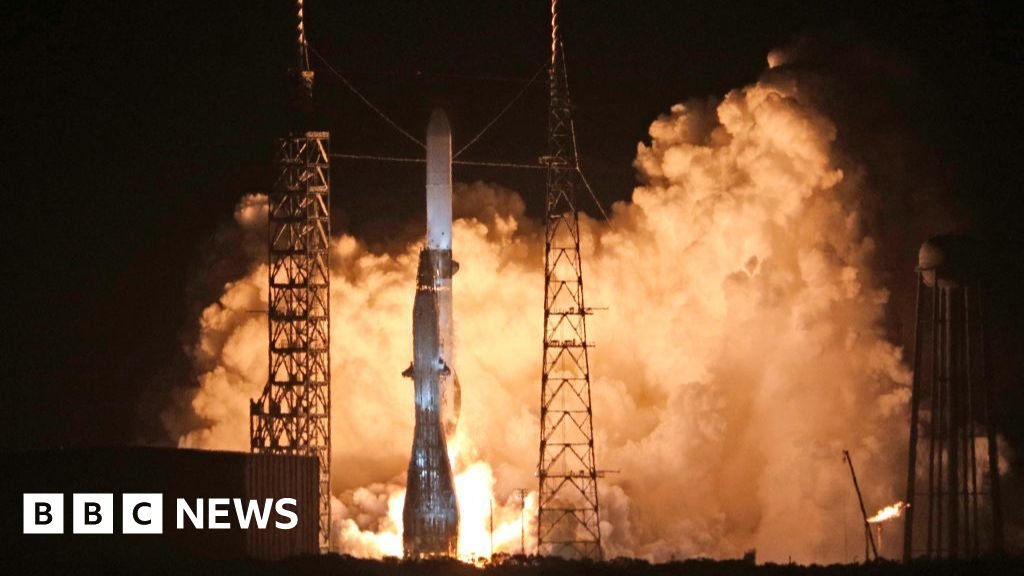
Amazon founder Jeff Bezos’ space company has launched its first rocket into orbit in a bid to challenge the dominance of Elon Musk’s SpaceX.
The New Glenn rocket launched from Cape Canaveral Space Force Station in Florida at 02:02 local time (07:02 GMT).
It pits the two richest men in the world squarely against each other in a commercial space race, competing to fly bigger and more powerful rockets.
Both want to populate the skies with more satellites, operate private space stations and provide transportation for regular human trips to the moon.
“Congratulations on reaching orbit on the first try!” Musk wrote in a post to Bezos on X.
Dave Limp, CEO of Bezos’ space company Blue Origin, said he was “incredibly proud”.
“We’ll learn a lot from today and try again at our next launch this spring,” he added.
Bezos’ team overcame technical barriers that caused delays earlier this week when ice formation halted the launch.
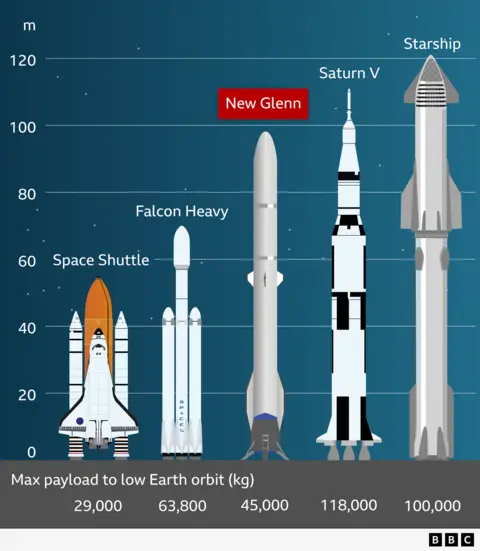
Blue Origin employees and crowds gathered near Cape Canaveral cheered as the 98-meter-tall rocket lifted off into orbit.
But the company failed to land New Glenn’s main rocket engine or booster on a platform in the Atlantic Ocean.
It was hoped the booster would be reusable for future launches, but after about 20 minutes of flight, the company confirmed it had lost the engine.
Bezos’ company Blue Origin is struggling to match the pace set by SpaceX. But this launch will be seen as a big step forward for the business.
The New Glenn rocket is named after John Glenn, the first American astronaut to orbit the Earth more than 60 years ago.
The rocket is more powerful than SpaceX’s most commonly used rocket, the Falcon 9. It can also carry more satellites, and Bezos wants to use it as part of his Kuiper project, which aims to deploy thousands of low-Earth satellites to provide broadband services.
This project will compete directly with Musk’s Starlink service.
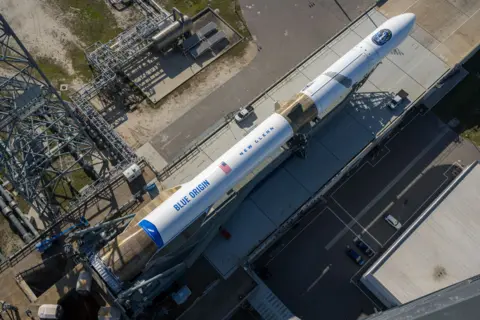 Blue Origin Media
Jeff Bezos founded Blue Origin 25 years ago, claiming he wanted “millions of people to work and live in space.”
For years, the venture has sent a smaller reusable rocket called New Shepard to the edge of Earth’s atmosphere. It has carried passengers and payloads, including Bezos himself in 2021.
But Blue Origin has been dramatically outpaced by SpaceX, which launched its rockets 134 times last year.
And SpaceX’s next-generation rocket, called Starship, is even more powerful. The company hopes to launch it on its seventh test flight later today.
Some experts say a successful New Glenn rocket would create real competition between the two companies and could lower the cost of space operations.
“What you’re going to see is that these two companies are challenging each other to make even bigger strides,” suggests Dr Simeon Barber of the UK’s Open University.
In the past, governments have spent billions building rockets and sending missions into space.
But the US space agency NASA has increasingly moved away from relying solely on public funds and has awarded huge contracts to private companies to provide rockets and other space services.
Elon Musk’s SpaceX has already received billions of dollars worth of space facility contracts.
His close relationship with the next US president, Donald Trump, could further strengthen his company.



